Showing posts with label Growing Up. Show all posts

Sunday, July 04, 2010

Of Independence Days Past

Today I reminded myself of a particular July 4th, 1951 I think it was, in which I really enjoyed the holiday for the first time--even though I had no idea of the political or historical issues implied by the day.

We had a picnic at the park in Larimore, where we lived at the time, after which we all went home to wait for dark, and fireworks. Uncle Jim brought a long trough, made of two 1x4 boards nailed together in a 10-ft long V. He leaned it against his truck, at a steep angle and tied it off to part of the bed.

He brought out the rocket. It was a foot or so long with a two-ft stick trailing behind. "This better work" he said. I could only afford one," he said as he lay it into the trough.

Some of the neighbors came over and brought their fireworks with them. Then, we fired bottle rockets, burned sparklers, fired off firecrackers and Roman Candles. We had a few fountains and some of those little helicopter fliers. Being not quite seven at the time, I had to content myself running around with sparklers--kind of a thrill at the time--and watching the other stuff.

Finally, we started seeing the high-flying rockets going up all around town. Uncle Jim shouted, "Ok! Here we go!" As we all gathered around, "not too close," as my Dad and other parents kept saying, Uncle Jim lit the fuse of the big rocket. The fuse burned for what seemed like minutes, but was really just a few seconds. Suddenly, there was a whoosh of sparks blowing out the bottom of the rocket, which quickly turned into a roar as the rocket flashed up the trough and into the sky. We followed the lengthening trail of burning powder until it looked like it was higher than the moon. Then the rocket exploded with a slightly delayed boom into a vast, multicolored umbrella of fire. Oohs and aahs escaped the lips of everyone there.

Well, it only lasted a few seconds--well under a minute. I watched the trail of smoke, in the light of the moon, until it drifted away and dissipated.

We stayed outside for a while longer, watching fireworks of neighbors, and other high-flying ones still going off around town.

That particular Independence Day sticks with me to this day, I guess because it was the first, very exciting fireworks of my young life. I feel for the kids born in other places, and more recent times, who miss the joy of the family/neighborhood Independence Day celebration with the picnics, softball games, followed by a fireworks show of which the kids are really a part.

How many of today's kids get to use ordinary firecrackers to "shoot the anvil," the anvil in this case being just a plain inverted empty tin can?

Those times are gone in this part of the country, for a number of reasons: Perversely over-protective parents. A government that wants us to forget our heritage. Lazy and authoritarian police and fire departments (they could teach kids how to use fireworks safely, not just ban them). Those times are forgotten by many, and never known by the young.

As adults work ever more toward the attempted creation of a nerf-world to keep the kids safe until they (the adults) die, many of the kids will grow up utterly unable to face the dangers--great and small--of value-seeking. The attainment of anything of value requires risk, and kids are learning to avoid risk at all costs, of they are simply not learning to deal.

The adventure of risk taking to attain goals is what built America, and it will slip away--it is slipping away--as America's parents produce more geldings in lieu of stallions.

Those who beat their swords into plowshares will plow for those who don't.

Warm regards,

Col. Hogan
Stalag California

Sunday, August 02, 2009

Adventures In The Mediterranean

I've always kind of regretted that I left the sea when I left the Navy, those many years ago. I've always loved the idea of sailing, especially of traveling by sailboat. I don't (regrettably) have any experience with sailboats, but in the Navy days I was occasionally engineer on a 50' power utility boat. I always enjoyed working on the utility boats. One of those really fun jobs!

Once in the seas south of Mallorca, we had to make a transfer of some people and supplies from one carrier--my ship, the USS Saratoga to another--the USS FD Roosevelt.

Turns out, the swells were about 20 feet--which the aircraft carriers didn't even notice, but the utility boats did.

I had the bow line, I was standing 'pon the foredeck ready to tie up as we approached the Roosevelt, and as we made our approach, a massive swell kicked the boat up and toward the side of the Roosevelt. The swell ebbed suddenly, leaving me about ten feet in the air, just holding onto that line for dear life!

The next swell brought the boat back up, violently (as far as my body was concerned). The boat surged upward as I fell downward, with painful results. I landed hard on the foredeck and managed to hang on. I got up and tied the line off and got back into the hold before the next big swell, which banged the boat into the side of Roosevelt. It knocked everyone off his feet but the Bosun, who was hanging on to the wheel. I still remember the bruises and muscle strains from that bit of acrobatics!

Ah, for the good ol' days!

The positive part of the story was liberty in Palma the next day. What a town!

From the Adventures of a wandering boy.

Warm regards,

Col. Hogan
Stalag California

Friday, November 28, 2008

Things I Did Not Learn At School

When I first flew into the Stalag, so many years ago, it was complements of Uncle Sam, sending me on a scenic cruise around a pretty big chunk of the western hemisphere. The first stop was the Recruit Training Center on Point Loma, a part of the seaside town of San Diego. Thence to the Training Center in Waukegan, Illinois to learn to maintain and repair diesel engines, and then to Mayport, outside of Jacksonville, Florida to spend the remainder of my enlistment aboard the USS Saratoga, which was not powered by diesel engines, but steam turbines.

The ship did have a number of diesel powered utility boats though, so I guess it was all right.

While billeted aboard that ship, I had no small number of adventures, some of which might have been the death of many a lesser man. I've decided that as the mood strikes me, I'll relate some of these tales for the amusement of friends and relatives. In fact, a few of these tales already find themselves languishing in the archives.

Several of we who graduated high school in the Central Class of 1961 opted to join the Navy within weeks or months of graduation. Every one of them, but myself, ended our training with orders to such places as Japan and the Philippines. I went to a ship on the east coast. Months later one friend, Gareth Johnson from East Grand Forks, suddenly appeared aboard Saratoga. We had been acquainted in Grand Forks; we became fast friends in that foreign setting.

Soon, we were off to the Mediterranean Sea for a cruise of several flight exercises and many foreign ports. Somewhere off the coast of Spain, we had a ship-to-ship with the other carrier in the fleet, the USS FD Roosevelt, as I recall. There was about a twenty-foot swell as we anchored, and we of the utility boat crew were to run some supplies and foodstuffs between the ships.

Handling a fifty-foot utility boat in a twenty-foot swell can be an adventure in itself when you're 20-years old. My job was the bow line. The trick was to secure the line to a vertical line tied high and low on the ship's hull, so that as the boat rises and falls with the swell, the lines slide up and down with it. Half a dozen fenders keeps the boat's wooden gunwales from getting chewed up by the steel ship's hull.

You wait for the top of the swell, then grab the jacob's ladder and scramble up as fast as you can, before the boat can come up on the next swell and hit you.

The funnest part of the day was the moment when I was standing 'pon the bow, bow line in hand, ready to tie off. Suddenly, the swell dropped away with the boat, leaving me ten feet in the air, holding onto the bow line for dear life. Luckily, the boat rose to meet me coming down, and I landed hard on the deck. Multiple bruises and a slightly sprained wrist.

Not far from this rendezvous was the island of Mallorca, where we anchored for a couple of days. This liberty turned out to be more of a plain old fashioned good time than what you'd call an adventure, and I wouldn't have missed it.

Gary and I were in the process of trying out local beers when we stumbled into a group of revelers from Britain. There were about eight or ten of them, visiting on holiday, and celebrating their last night before their return flight home.

The group, both boys and girls around my own age, turned out to be an excursion group, none of whom had known each other, before this holiday. There were no boy-girl friends in the group, as was evidenced by the fact that two of the girls quickly fastened onto to Gary and I, and there were no fights.

Mary Collins was her name, and she was from Cardiff. She was (and still is, one hopes) a very pretty and fun-loving girl. She told me I looked like Paul McCartney. I asked her who was Paul McCartney? In all fairness, it was 1963, and I'd been kind of out of circulation aboard the ship for a while. The Beatles weren't very widely known in the States, at that time.

I probably wouldn't recall her name (although there are things about her that I'll not forget), except that we kept in touch for a while, and as it happens, I still have one of her letters.

She reminds me of some of the things we did. There are other things of which she doesn't need to remind me. Seems we did some more beer drinking, and at one point, ran off from a sidewalk cafe without paying. Now, I don't remember doing that. It's something I'd never do, although I did drink a lot more in those days than since.

We ended up in a secluded corner of a park, each with a bottle of beer in hand. Alas, the night was too short. She had to catch her plane and I had to muster aboard the ship. I had to call in a favor to get my pals on the utility boats to smuggle me back to the ship, five hours late.

An indisputable fact: it was worth it!

Never stop having adventures.

Warm regards,

Col. Hogan
Stalag California

Saturday, July 26, 2008

Nation of the Flies

I often wonder what the world will be like a century from now, or even twenty years along. I'm observing that the government children's prison system and the media are seem to be doing everything they can imagine to keep children from full adulthood--by de-emphasizing the need for personal responsibility and critical thinking, and many other activities to which man (in Dirty Lab lingo, man is an abbreviation of human, which is a species of critter that has a female sex--woman--and a male sex--man--and is inclusive) must attend if he's to even begin to fulfill his potential. One can only conclude that the individuals who operate these institutions want to see mankind stunted and mentally/psychologically crippled to remain a sort of world of children throughout their lives.

Another trait these elitists are trying to destroy is that of defiance. As I've mentioned in the past, the only reason for this is that the elitists want a subdued, compliant populace to follow quietly along the elitists' path toward a new feudalism. Most of us are already in the mindset of serfdom already, after decades of conditioning and propagandizing. We can see it wherever we go.

Since the children's prisons seem to be teaching mainly compliance and subservience. Any teaching of that which is necessary for children to become adults must come from the parents. In addition, it has to be hoped that there's some spark of individualism left with the parents, they already having been bathed in humanity-robbing propaganda during their own school years. One bit of evidence that young people are failing to reach adulthood is the relatively common phenomenon of adult children living in their parents' homes well into legal adulthood--presumably with their teddy bears.

The failings of many of today's parents include the inability or lack of desire to:
  • Teach their children the work ethic.
  • Teach critical thinking.
  • Teach time management.
  • Be parents.
  • Teach children to dress properly.
  • Teach children common courtesy.
  • Teach them to defend themselves.
Many parents fail to allow their children to learn for themselves by:
  • Never allowing them to be alone.
  • Never letting them set their own goals.
  • Never letting them achieve their goals on their own.
  • Never letting them achieve self reliance.
  • Never letting them have adventures.
Or even:
  • Letting them walk to the places they go.
  • Letting them go to a public rest room by themselves.
  • Letting them go to summer camp without their cell phones.
  • Letting them find work, earn money and spend it as they will, on their own.
I became a streetcorner newsie when I was ten. It was wonderful, having my own money.

Years ago, I had a job in which I hired kids. I'm not sure if that could still happen today. I tried to instill in them responsibility and pride in a job well done. I tried to teach them to make change properly--something the children's prison hadn't done. We didn't have cash registers with pictures on the keys in gas stations back then.

They'll have kids of their own by now. I hope a little of what I tried to teach stuck.

The road to serfdom is all downhill.

Warm regards,

Col. Hogan
Stalag California

Friday, April 11, 2008


Keeping the Kids In a Soundproof, Padded Cell

As I sit in my car at a red light, I often look at the car beside me. Most of the time, if it's a woman, she's on the phone.....but that's not my point right now. I want to focus 'pon the back seat, 'pon which there's often a padded, plastic contraption into which a poor young child is strapped in, more securely than a condemned murderer is strapped into the electric chair.

Sometimes, the poor child's end is fairly similar--burned to death cruelly strapped into a padded coffin which requires someone else to remove to safety.

Proponents of these plastic maidens cite stats that indicate that a child is much safer hog tied in the back seat in the event of a collision or a rollover. I imagine that that is probably true, as far as it goes. On the other hand, when mom and dad are in the front seat arguing, or simply chatting....or when the driver is talking on a phone or driving 85 mph while trying to unwrap a burrito, the youngster strapped into his little cocoon is no safer than were he sitting, untethered, on the hood of the car.

Today's crowded streets and freeways, swarming with cars driven by young men and women who have no notion of the connection between actions and consequences, old folks whose physical and mental abilities have begun to diminish, foreign-born folks who learned to drive (to the extent that they can) very recently, and middle-aged working folk less concerned with getting there than with what they'll do when they arrive. In this venue, driving is a full-time job, for those of us who want to avoid crumpled metal (crumpled plastic, if you drive a foreign-made car), requiring all of one's attention.

To take the foolishness a step farther, I've observed on many more occasions than I like, seeing parents removing the youngster from the car, if he's a baby or a toddler, in his little suicide seat into the store or restaurant, placed it the shopping cart or on the chair or seat as a unit, keeping him immobile and fully bound--often gagged with a mouth plug, through dinner, the shopping trip, or whatever. One has to wonder if, when they get home, they just throw the Kiddie Kocoon into the corner, toddler and all, until bedtime.

So maybe, just maybe, in a certain kind of automotive mishap, a child might survive that otherwise might be killed or seriously injured.

What about the kids whose parents don't do the stupid stuff that causes (or fails to avoid) collisions? Why should they have to suffer, bound and gagged in the rearmost sections of the vehicle, kept in stasis while surging through a scary world that he can't see from his confinement.
Not having young children any more, I can only wonder how they ever grow up sane from their sensory deprivation capsules in the back of their mother's unarmed Armada.

When I was growing up, there were four of us. One of us (my little brother) lay in Mom's lap in front. The other three of us sat in the back. If it was a long drive, usually we'd take turns lying up in the back package shelf, looking at the following cars or up at the stars and moon. Going somewhere in the car was fun, and something to which to look forward.

If it wasn't too cold, we'd open the windows and stick our heads out, like dogs, or shape our hands into lift surfaces out in the wind. We'd wave at the truck drivers and look for out-of-state plates.

We were never involved in a collision.

When my kids were little, it was the same, except we all had seat belts. The key, of course, was to not crash into things with your car. With a couple of minor (no injury) exceptions, I've always been very good at that. I keep my phone in my pocket, and rarely (almost never) answer it until I park the car. "Leave a message, I'll get back to you."

There is, no doubt, reams of evidence indicating that childhood obesity is exacerbated by long periods of enforced immobility in their isolation chambers in the back of the car.

Soon, someone will invent the Kid-ee-muffler to wrap around his face so we won't have to listen to him, either.

Just until we can ship him off to the children's prison.

Warm regards,

Col. Hogan
Stalag California

Saturday, December 15, 2007

Priscilla the Knife

More years ago than can be counted on both your fingers and toes and mine, I was an elementary school student at West Elementary School in Grand Forks, North Dakota. Admittedly, it was a different time, but the principles involved are the same. The stated goal of the government children's prison system is to help parents prepare youngsters to be able to function as adults in the real world. Today, the children's prisons are failing--not only by ineptitude, but by conscious intent. They are trying to make herd animals out of our youth!

I'm not sure they weren't already working in that direction in my skool daze; after all, most people my age are eight-hour-a-day wage slaves just as are those graduating colleges today. Seems like many of the high-profile successes 'bout whom we read in the business journals and society gossip pages got where they are after slipping the yoke in their own youth.

Now, I like what I do, and actually look forward to going to work most days, but sometimes I wonder why I'm not a movie studio executive or a famous writer or a crocodile hunter. Well, with age comes wisdom, and I finally realized that my difficulty is that I've always been afraid to take risks regarding my livelihood. Fact of life. Now, I have to ponder the question of whether it's too late to change.

But, I'm wandering away from the subject: the abominable and purposeful failure of the government children's prison system, and its stubborn and deliberate inability to make educated and functional adults out of children. Parents are also failing at their part, as well--they were inmates of children's prisons in their youth.

Yesterday, according to a story on the website of Local 6 News in Orlando, Florida, a ten-year-old girl, an inmate at the Sunrise Elementary School in Ocala, was arrested for having a knife on school property--a felony in Florida. She had a steak knife that she'd brought from home, and was using it to cut her lunch into bite-sized bits.

There was no allegation that she'd used the knife in a threatening manner. She was transported down to Juvie Hall, presumably to be flogged, then stretched on the rack until she admits membership in a pre-teen terrorist organization. Look for a much taller Priscilla if and when she's released (or when her cabal effects an escape for her).

The long-ago time I referenced earlier in this missive saw me and many of my contemporaries carrying knives to school, and everywhere else, routinely. We called them jackknives, and they were often given to boys as Christmas gifts by fathers and uncles. They were a permanent part of our trouser pockets, and we used them to make slingshots and to carve our initials into the bark of trees. As Cub Scouts and Boy Scouts, our jackknives were an indispensable tool, to be used to do the tasks required to earn achievement badges.

I can only assume that young girls learned (in those days) to do Girl Scout things with knives, not to mention to learn to cook and bake under the tutelage of their mothers. And, of course, we all had to learn to handle tableware to dine without taking on the appearance of islamic savages.

What is it this that the Florida Children's Prison System is rejecting? The notion of eating meals like a civilized human being? Will the use of hands next be rejected? I can almost imagine the guards and wardens of the Florida Children's Prison System nodding in approval at the sight of the youngsters bent over the tables, faces in their plates and making snarling and snorting sounds while trying to snarf up gruel at the school cafeteria.

How long until walking upright will be forbidden?

Darwin was wrong. It's Devolution.

Warm regards,

Col. Hogan
Stalag California

Saturday, November 03, 2007

Hot Rod Fever

The preliminaries, called "qualifying," of the NHRA Finals at Pomona, are going on as I write this. I'd rather be there than here, but where's the time, where's the money? Qualifying goes on for three days, and is both exciting and fun. The fourth day, Sunday, is Final Eliminations, in which the race winners in each of four classes are determined. It's all very noisy and very exciting. If you've never heard (and felt) the roar of a 8000+ horsepower engine covering a quarter-mile from a standing start in four-and-one-half seconds, you've missed an extreme assault 'pon your senses.

A story in the LA Times Sports section the other day reminded me of the long history drag racing has in Southern California. It started here, as did many things, in the wake of World War II, with surviving veterans looking for outlets for the excitement to which they'd become accustomed while slogging through the mud and sands of faraway places.

There were the bikers, and there were the hot rodders.

Hot rodders would work on their cars, making them lighter by taking off superfluous parts and faster by installing bigger engines, modifying them and by using different tire/wheel/brake/suspension combinations. Naturally, they'd race against each other to measure the success of their efforts.

At first, the races were on rarely used roads ans streets. After a number of collisions and pileups, when the local police started cracking down, enterprising individuals started setting up dedicated race tracks around the Los Angeles area, for use by area hot rodders for a reasonable fee. For years, these tracks thrived. Between 1950 and the early 1980's, there were as many as eleven drag strips in Southern California.

Now, they're all gone but one, and that's at Pomona. It's not available for today's young hot rodders to use on any weekend.

Some say they all closed because of the rise in land values in Southern California. Others cite high insurance costs, in an era when a signed release of liability by an adult means nothing in a court of law.

Meanwhile, thrill seeking young men (and now, young women) still want to race. With no drag strips available this side of Bakersfield, where do they race? The streets. At night. In the normally quiet suburbs.

Since Southern California has a far denser population than in the late 1940's, quiet roads and streets are increasingly harder to find. There are more racing collisions, some involving the public, and some involving death.

But for an unknown and unknowable government regulations, edicts and unneeded laws, insurance organizations would be willing to write policies for reasonable prices, and in the absence of draconian taxes, land would be more available at lower prices.

I don't know if an absence of government intervention would mean more drag strips or not. A favorite theory of mine is that cars would soon become obsolete in favor of personal aircraft. That process was begun (by some of those same post WWII thrill seekers) and quickly squelched by the evil Civil Aeronautics Board in the 1950's. It will still happen, once government is gotten out of the way. And then, it won't be any time at all before aero hot rodders will be racing 'em.

Feeling the need for speed.

Warm regards,

Col. Hogan
Stalag California

Monday, August 20, 2007


In The Navy: Part I

Some might question the wisdom of what I did. All I can say in my defense is: 1) I was only 17 and knew no better and 2) I was a small-town lad from North Dakota who'd never seen the sea.

What did I do? I hated the idea of the military draft every bit as much then as I do now, and for just about the same reasons. My high school pal Richard Nordrum went to Winnipeg to avoid the draft, and for whatever other reasons remain closely held. He remains there to this day, and by all accounts, does not regret his decision. I, rather than be drafted into the Army, joined the Navy.

There are certain benefits to volunteering rather than being drafted, one of which is a (kind of) choice of work rating, and the training that comes with it. I knew I wanted to work in construction, so my first choice was Equipment Operator in the Seabees. My second choice was Engineman, which is simply a mechanic. Since I was already a frustrated hot rodder (Frustration coming from a chronic lack of money), the thought of becoming a mechanic wasn't the worst possible fate.

I went to Engineman School in Great Lakes, Ill. It was a very good school, and I learned a lot--some of which I apply to this day while working on my own cars.

It was during this period that I made several hitchhiking trips from Waukegan to Grand Forks on weekend liberties.

It was oddly prophetic that in 1962, we had three VietNamese petty officers in our class. I didn't even know what VietNam was, beyond being able to locate it on a map. These fellas, and others that attended other classes, were part of the early aid program that the US was giving to South VietNam in those early months before we entered the war militarily.

The only name I remember of the three guys is Choe Pyong Su, an Engineman 1st Class. He was the elder of the group; around thirty at the time. We all spent some time together, drinking beer and talking about ourselves. They were planning to go back home and kick some commie ass, they said.

I hope they did. I hope they're still alive.

I always thought, and still think that our intervention in VietNam's struggle was none of our (America's) business, but that didn't keep me from picking sides. The US government really did South VietNam dirty by accelerating the war to such a high degree, then walking away. South VietNam got screwed as much by the US government as by the North VietNam dictatorship. A lot of good people died needlessly.

They've killed Freedom! Those bastards!

Warm regards,

Col. Hogan
Stalag California

Thursday, August 02, 2007


Fastest Thumb in the West

Back in my hitchhiking days, as related in this earlier entry, mainly in the early 1960's before the hippies ruined it, I used to be able to outrun the Greyhounds on my thumb. I did so many times. Often, my rides came from truckers who wanted a conversation to help pass the time. Sometimes I'd ride in a truck all night long, talking with the driver about roads, cities, past adventures and even politics. He'd often spring for breakfast to boot, even though I'd try to talk him out of it. 'Twas I who owed him, and sometimes I'd manage to talk him into letting me take the tab.

Once, when hitching from the Great Lakes Naval Training Center in Waukegan, Illinois to Grand Forks in winter, I was dropped off at about midnight in the outskirts of Bemidji, Minnesota (Curling capital of the United States). It was cold. Very cold, and still. The air was so cold it couldn't move. I was in Navy blues (wool) with just a peacoat. I knew that if I didn't get a ride soon, I'd have to find shelter or I'd freeze.

There was very little traffic.

I kept my eyes on a nearby building, a meeting hall of some sort. It was all lit up. The plan was to go over there if I got dangerously cold. Or, if the lights started going out.

After about an hour, I knew I couldn't last much longer. Did I mention it was cold?

A truck appeared and I shifted to make sure I was in his headlights. He stopped!

Man, did that warm cab feel good! I thawed. Soon, I could move my knees and elbows without hearing the creaking of my joints.

There were two drivers in the truck--one in the coffin and one driving. They were Canadians. Because of the relative quality of American highways, Canadians often opted to use them instead of braving the northern highways, even with the additional miles. These guys were coming from somewhere near Ottawa and headed for Winnipeg.

The driver said he thought I might be in trouble. I told him I was about to start knocking on doors.

The guy in the back joined in, and we talked about Canada. I was kind of interested in Canada, because Grand Forks is only 75 miles from Winnipeg and I'd go up there once in a while. They had some great coffee houses there, in which there was poetry reading and folk singers. I never could understand beatnik poetry (I think I was too rational to get it), but I liked the folk music of the time. The Kingston Trio were among my favorites, and this one coffee house had a copycat trio.

I digress.

In the end, the guys said that I could visit Canada as much as I want, but I should stay in the US. They stopped at a truck stop in Crookston, where they were turning north. After a break and a hot cup, I bid the guys thanks and farewell, and they drove off as the first glow of morning appeared in the east.

Crookston is only about 15 miles from Grand Forks, and I got a ride pretty quickly. I hit the streets of town at about 8am Saturday, according to the First National Bank's time/temperature clock. The clock also flashed 30 degrees below zero (F).

Later, the tv declared that it had been 56 below in Bemidji overnight.

Little wonder that Babe is a blue ox!

Warm regards,

Col. Hogan
Stalag California

Tuesday, July 10, 2007


Hey, Rube!

Just the other day, I started getting Turner Classic Movies Channel on my cable. I really like old movies, and with AMC moving toward newer movies and other programming, I wasn't getting my fix. I've wanted the station for a long time, and finally called the evil cable company to get it (there are easily twenty-five channels I'd give up for that one--hands down).

The other night, I watched an old romantic comedy, Road Show (1941, Hal Roach) a kind of obscure movie about a rich playboy who, afraid of marring a gold digger, has an attack of catatonia. He wakes up in a loonie bin.

Unable to talk his way out, he soon runs into a resourceful manic with whom he escapes to a down and out travelling carnival. They work at the carnival while our hero and the young blonde carnival owner fall in love. It was a nice, if light and predictable movie.

What all this leads to is the recollection conjured up by this movie, of a traveling carnival that came to my town, many, many years ago.

I grew up on North Dakota. While we were all aware of tv, and wished we had one, there was not yet a broadcasting station close enough to send a signal we could receive. Thus, there were no tv's in our town.

Dad was a telegraph operator for the Great Northern Railroad. He was still paying his dues at the time, so we moved from one town to another from time to time. I went to second and third grade in a little farm town called Larimore, North Dakota.

We kids were pretty free, in those days, to run around and get into any trouble we could. One summer day, I was walking on a street near the edge of town, I noticed some unusually frantic activity. There were several trucks being unloaded by more than a dozen men, and a few women. Huge stakes were being pounded into the ground, in an orderly manner.

Interested, I moved closer to watch.

It soon became apparent that they were erecting a huge, colorful tent. There was also a row of booths going up alongside and much other activity, the nature if which I didn't understand. Turned out, it was the midway, through which you had to pass to get to the big top. There would be attractions, such as games of chance and sideshows along the midway.

A short, chubby man saw me and waved me over.

"Kid, I'm Oscar." I told him my name. "This is a carnival. You want some free tickets to the show?" "Sure." He took me over to a big tank in the back of a truck. "Here's a bucket, here's a dipper. Fill the bucket with water from this faucet and carry it around to the men, so they can get a drink." "Ok." "Don't get too close to the work, and watch the hammers."

I carried the bucket from one work area to another and let the men drink, refilling it as it emptied. The men were kind of rough, but friendly, as were the women. I worked for two or three hours, all the while watching the big tent go up. When the tent was finally up, Oscar stopped me and said that was good enough. The workers were going to break for dinner.

Oscar handed me a handful of tickets. "Give these to all your friends, and one for yourself. They're for the show tomorrow night at seven. And here's a dollar for your work."

Now, at the time a dollar was a lot of money. I left there a happy kid.

I now know that the tickets were a ploy to get us to bring our parents, who would have to buy tickets, and that was ok with me. It was a good show (though not nearly to Barnum & Bailey standards, as I later learned), with a trapeze act, horses, a couple of elephants and a lion act. There were clowns and acrobats, etc.

My friends and I had a great time. I think I spent the whole dollar there in the midway.

The carnival was called "Little Oscar's" and I've never heard of it since. I've seen the big circuses several times but, even though they were bigger and slicker, none has been quite as exciting as Little Oscar's.

That time.....is past.

Warm regards,

Col. Hogan
Stalag California

Addenda:

After thinking about my memories of this incident, I spent a little time pondering. I haven't thought about it in a really long time until the viewing of this film brought it back.

Freedom. This was a time when you could travel freely about and ply your trade without needing permits, licenses and permissions. Presumably, the principals of the carnival paid taxes and chatted with the local police in each town, but I suspect that the only permission they needed was from the owner of the field 'pon which they planned to set up.

The roustabouts probably came and left as they pleased, hooking up with a carnival as they needed money. Because this casual kind of work is no longer available, many of these are among those we currently call "the homeless." Carnival owners probably picked their schedule strictly according to where they thought they could make money--subject to a sort of coordination with their competitors.

These carnivals could never exist, given the nature of local government corruption and intervention--not to mention the evil and unConstitutional Homeland Security thugs.

Thoughts on my personal danger: In the 1950's midwest, harming children was unheard of. It was for New York and other big cities. My recollection of detail is sketchy, but I recall some of the men were pretty rough and rowdy. It was, though, broad daylight in the middle of a wide open field.

Today, parents would shudder over such a thing.

This is one of many recollections that make me think I grew up in the best possible time in history.

Monday, May 28, 2007


Remembering Sara

Another Memorial Day, and along with the thoughts toward those military men and women who have died in the various wars in which the United States have been involved, I always remember my own military experience. Mine was a generally easy enlistment, but there were several very tense days.

I was an engineman aboard the USS Saratoga. Part of my job was to run and maintain the compressors that supplied compressed air throughout the ship for various purposes, perhaps the most important of which was to return the catapults to their set positions after the launch of a plane, in preparation for the launch of the next one.

At general quarters, my job was to feed a foam machine for fire retardation. Usually that meant a plane crash on the flight deck. It happened once during the time I was there. Six men lost, five planes.

That was another story, one about which the Navy never really saw fit to fully inform those of use who worked below decks. I only saw the scorched and twisted metal that used to be airplanes, after the fire was out and the men were in sick bay or.....

Back to the current story, we left our berth at Mayport on what was (to most of us) just a routine cruise through the Caribbean. Some flight ops and a chance to buy tax-free smokes. The Cuba situation was in the news, but it wasn't mentioned as we returned from liberty and found out we were steaming in the morning.

It turns out, we learned later, that we were to be involved in the Cuban Missile Crisis.

We noticed the difference almost immediately. No sooner were we out of sight of land that the drills started. Fire drills and general quarters. one after another, sometimes three or four a day--or night, more likely. This in addition to your regular job and your watch duty.

There was no news, of course. We couldn't have distracted sailors, could we? But there were rumors. There could be a nuclear attack on the US from Cuba at any moment. USSR was setting up missile launch sites, and they were shipping in more missiles.

We were there to see that no more USSR ships reached Cuba, the President was to negotiate the removal of those already there.

Fortunately, USSR blinked first, and after a couple of weeks of tension and continual general quarters drills, we returned to routine sailing and made our way to Guantanamo for a couple of days of refueling, and a spot of liberty within the confines of the Gitmo base. Drinking happened.

We spent some more time steaming around the Carib, and finally returned to Mayport.

I never heard if there was a medal for that little skirmish, and certainly nobody gave me one. I wasn't really into medals as my enlistment neared its end, I just bought an old car for the drive home, and left when they handed me my DD214.

I think about it mainly on days like Memorial Day and Veterans' Day. A lot of guys had it worse than I did, and that continues to this day. I take this time to remember them, as best I can, never having looked into the eyes of an enemy soldier.

Like it or not, agree or not, there is a little difference in the way one looks at it, if he was there.

If the United States were free, like in times past, it'd seem more worth it, maybe.

Winning on the battlefield, losing in the Capitol.

Warm regards,

Col. Hogan
Stalag California

Sunday, March 04, 2007


1957

1957 was quite a year. Eisenhower was President, Nixon was VP. The Milwaukee Braves won the World Series, the Montreal Canadiens won the Stanley Cup. The average American's income was $4494, a stamp was three cents and a loaf of bread was nineteen cents.

Fifty years ago, I was in the second semester of my seventh grade of school. I had a newspaper route and a car (a 1950 Chevy, which I couldn't yet drive on the street, but which I enjoyed wrenchin' on and driving it up and down the driveway). I was in love with a very lovely girl who was a lot smarter than I.

In Grand Forks at that time, anyone--boy or girl, man or woman--could walk down any street, any time of day or night, without fear of being accosted by either thug or police. I occasionally went for late-night walks to think and enjoy the peace.

It was a wonderful year, and a wonderful time.

Thinking about 1957 caused me to develop what I call "The Ten Times Rule." Everything costs about ten times today what it cost in 1957. I made up that rule about ten years ago, when I realized that a nickel candy bar then cost fifty cents and a loaded 1957 Chevy Bel Air hardtop that cost about $2500 whereas a 1997 Chevy Impala was priced at over $20,000 and a Camaro Z28 could cost over $30,000. A bottle of Coke cost a nickel; a can of Coke in 1997 cost around fifty cents.

Gasoline sold for 20 to 30 cents a gallon, depending 'pon in what state 'twas purchased, and in recent times tends to hover just below $3.00. A Colt 1911A1 pistol cost around $100 in 1957, in 1997 it could be had for around $500 or so; somewhat an exception to the "Rule."

One has to be pretty careful about applying the "Rule" as products have changed a lot over the intervening decades. In addition, this isn't 1997 any more. I'd have to call it "The Twelve Times Rule now. In fact, perhaps I will. It'll require slightly more difficult mental calculation, but I'll try to measure up to the task.

There are a lot of factors causing these increases. There've been major changes in manufacturing methods and materials and business practices. There has been great technological advancement. These differences, one might argue (convincingly) would tend to keep prices low.

Well, one might ask, then why are prices twelve times higher than they were in 1957? Well, dear friends, here comes the not-too-surprising answer: There are three primary reasons why prices have increased punishingly in the past fifty years. They are 1) government, 2) government and 3) government.

1) Draconian and confiscatory increases in taxes 'pon individuals and business--which, of course, end up being paid by individuals. My dad told me, years ago, that his total taxes, federal, state and local, totalled around ten percent of his income. My current tax load is over fifty percent of my income--not including a lot of hidden taxes that are not known to me.

2) Mindless and unneeded regulations 'pon individuals and business. Government regulation is so much a spaghetti bowl of tangled and undecipherable, not to mention often contradictory hodge-podge of safety, accounting and "moral" rules that the only way any of us can function is to ignore most of them and hope we're not noticed. Even after that, these regulations cost each of us an incalculable amount of time and money.

3) Government manipulation of the money supply. Prior to the formation of the evil and manipulative Federal Reserve, American money was gold and silver. While, even then, government wrongfully pegged the "value" of these commodities in dollars, our money was very stable and could be predicted from year to year. Since that time the Fed, acting 'pon government orders, adjusts the money supply to suit government purposes. In bad times, the value of our money decreases three percent or so annually. In worse times, money value has decreased at rates up to ten or twelve percent per year, and more. In the worst times, money is simply revalued by a factor. Devaluing is always a surprise and instantly robs the money holdings of individuals and corporations instantly and severely.

Intelligent estimates are that, in the absence of the above, each hour of the productive work of each individual would be worth six to eight times what it is, under the handicap of the hobbles forced 'pon us by government.

Why do we put up with them, the parasites that so severely and deliberately place limits 'pon our ability to function? 'Twas a frog-in-the-kettle sort of story. Had government tossed a frog into a kettle of hot water, it would've jumped out quickly to escape the pain. Government has tossed us into a kettle of cool water, and is very gradually turning up the heat, and we're complacently enjoying the warming water--not yet noticing that it's becoming uncomfortably hot on the way to boiling us to death.

How long are we going to put up with it?

They've killed Freedom! Those bastards!

Col. Hogan
Stalag California

Monday, February 05, 2007


The Prince of Phallic Symbolism

It might seem like I'm stuck of talk show hosts, and maybe I am, but I just have to write about this, since it at once stands out as irrefutable proof that the christian taliban right is obsessed with sexual symbolism, if not with the sex itself.

I watched the HyperBowl game yesterday, and enjoyed it, in spite of the fact that I'm not that much of a fan of foopbaw. I've always rather enjoyed the game played under inclement weather conditions. It's interesting to see how the players deal with rain, snow, cold and/or a muddy field. In yesterday's game, the main problem was a steady rain that lasted troughout the game. One of the reasons my interest in the game has flagged, is the proliferation of covered stadia. Traditionally, foopbaw is an outdoor sport.

Debbie and I watched the halftime show with a high degree of enthusiasm, both being Prince fans. While I might've picked a slightly different playlist, I still enjoyed it thoroughly. As did Debbie. I commented that this was one of the only halftime shows that actually worked, in several years.

This morning, on the infamous Laura Ingraham talk show, I found out how wrong I was. I didn't notice this, I was enjoying the show: seems that, at one point, Prince used a wind machine to blow a large, white cloth sheet to a vertical, flapping, moving screen 'pon which the lighting caused his shadow to be displayed as he sang and played his guitar. For a brief moment, Price turned so that the shadow of his body hid the guitar body, and the neck of the guitar appeared to be sticking out of the front of his pants. As he ran his hand up and down the frets, well, you can imagine how that looked.

Ms Ingraham, sexually repressed individual that she appears to be, jumped 'pon that image like Miss Balbricker in the shower scene in the film Porky's.

Ms Ingraham spent a large portion of her show discussing this, bringing up the Janet Jackson/Justin Timberlake show a few years ago. It seems we can see which kind of individual is sex-obsessed.

One of the excuses Ms Ingraham (and others--Hannity, O'Reilly, et al) uses for her fixation 'pon these kinds of images is that of protecting the children.

We have to protect the children.

I don't think it's the job of the christian taliban right to make the world child-safe. I don't want the world to be child safe, nor is it its nature to be so.

Parents, care for your children. Love your children. What you teach them in their first four years will go far toward their psychological makeup throughout their lives. What you teach them in the next ten or so years will make young men and women out of them.

And, for the sake of their safety and future sanity, keep them out of the government's children's prisons!! They're getting more and more dangerous and more and more destructive of the uniqueness of the individual.

No one has ever been able to convince me that casually observed sexual images are destructive to children. Usually, they elicit an attack of curiosity--normal and healthy for a child. You tell the youngster the truth--just enough to satisfy his curiosity. You can tell him more later, as he gets older.

"Protecting" a child from his own adulthood is far more destructive than any casually observed sexual images he might encounter. If you can manage to protect your children from sexual abuse--a formidable enough task--that'll do. That'll do, along with his education and your love.

Government schools are child abuse.

Warm regards,

Col. Hogan
Stalag California

Saturday, February 03, 2007


It's Not Only the Islamists

This afternoon, I was watching Fox News. A program called "Heartland, with John Kasich" was on. I don't often watch this show, because Kasich seems such a stupid man. A topic on his show caught my eye.

He was interviewing a couple of women on the subject of teaching "exotic dancing" to teenage girls. One of the women conducts classes on exotic dancing, and offers reasons why a teenage girl might want to learn the techniques. The other, obviously, thinks this is stupid. Or rather, in today's typical non-judgemental speak, not helpful.

Kasich is downright hostile. Clearly, he thinks any mention or suggestion of anything sexual to any girl under the age of, say sixty, is robbing a girl of her childhood.

Well, unlike John Kasich, I was a child once, and though I had a pretty good childhood, at the time, I was continually wishing it was over so I could go out and do real stuff. Childhood, though a carefree time of learning and playing (ideally) seems vastly overrated.

What could be wrong with teaching young girls to dance, in any manner, when they've decided that they would like it?

I know from previous experience that Kasich is a christian conservative. He was in Congress for a short time and, fortunately for all of us, is no longer there. As far as his opinions on the subjects of girls, women and sexuality, Kasich falls in the same category with other christian conservatives like media personalities Sean Hannity, Bill O'Reilly, Laura Ingraham and others. Put girls in burqas and keep them from any knowledge of things sexual until marriage. Put the boys in uniform and send them to war.

Girls ought to be educated by their parents gradually, as they express curiosity about things sexual--especially the dangerous aspects--and then guided as they grow up. Then, they should be trusted to behave intelligently as they attain adulthood.

Most parents are way too protective of their kids, for far too long. It often leaves them unprepared to deal with the world as they become adults.

Kids are always smarter (in many respects) than adults think they are.

We should let them be adults.

Warm regards,

Col. Hogan
Stalag California

Friday, January 26, 2007


Elizabeth Caldwell! Paging Miss Caldwell!

Diving way, way back into ancient memory files, I occasionally recall a girl for whom I felt a degree of juvenile fondness. I've stumbled across many of my childhood friends, in recent years, thanks largely to Algore's Internet, but Miss Caldwell still manages to elude my efforts.

It was she who was the seventh-grade science fair whiz about whom I wrote
here.

I was in the same class with her in 5th and 6th grades at West School in Grand Forks. I was just beginning to realize that girls were just possibly worthy of our attention. In junior High, both of us attended Valley, and I had a few "dates" with her. The dates consisted of my visiting at her home in the presence of at least one of her parents. Since I was a very naive young lad, and utterly ignorant of the ways of the world, I found this quite satisfying.

Elizabeth had dark, nearly black hair and very light skin. I though she was beautiful and, in my mind's eye, I still think so.

We had a date or two in high school and had a couple of classes together, but her path was toward the university and an academic life; mine was more technologically bent. She did science projects and played the French horn and I made mischief and worked on my car. And drove it.

Elizabeth graduated early, at the Senior mid-term, I graduated at the end of the Senior year. Two weeks after graduation, I joined the Navy, and completely lost track of her and all my other hometown friends--except those few who also joined the Navy.

On occasion, I've asked some of my friends what happened to others. I've located many of them. All I've learned about Elizabeth is that she went to University of North Dakota, and later I heard that she was a French language professor at Valparaiso. Since I don't know of her marital status, I don't know her surname.

Other than idle curiosity, I'd like to learn more about her because she was the individual, among all my friends and classmates, who seemed like she'd go the farthest.

Or, maybe she's just shrugged.

Warm regards,

Col. Hogan
Stalag California

Saturday, January 06, 2007

Child Prodigy or Child Abuse?

I think the conversation started with regard to Donald Trump and the Miss USA Pageant, and the controversy surrounding Tara Conner's recent antics. The point was made that Miss USA is simply a beauty contest. I suggested that it could be termed a high-priced wet t-shirt contest, for which I was pelted painfully with peanut M&M's.

Then someone observed that in the Miss America Pageant, the contestants compete on the basis of their ability to entertain, as well as their beauty and poise, and their desire to help achieve peace on earth.

Somehow, the conversation turned to the late JonBenet Ramsey. Someone repeated the oft-mentioned opinion that poor JonBenet was being victimized (before her untimely death, of course) by her parents for training her so rigorously for these pageants, from such a young age. What kind of childhood could she have? Or could she have had, but for her tragic murder?

We used JonBenet as the example because her case happens to have been running through the news in the past couple of months, and we spoke of her in a manner of projection, as if she had not been murdered, and were still following the plan set for her by her mother--a past contestant and pageant afficionada.

JonBenet would have faced a childhood of dance training, tutoring in poise in front of audiences, as well as child pageants. She would graduate to cheerleading and teen pageants, and go on to the adult pageants, if all had gone according to her parents' plans. One has to guess that JonBenet found all this enjoyable as well, since she appeared to be enjoying herself and appeared to be applying herself.

Where she would've gone from there as she reached adulthood, would've been up to her.

Most media people who've spoken to this issue and this case, all the way back to the time of JonBenet's tragic murder when her story rose to prominence nationally, have spoken from an assumption that hers was to be a tragic life of all work and no play. The tone seemed to be (without anyone having actually said so) that her death was a merciful release from a projected unfulfilling life.

Some of my friends seemed to lean in that direction. I emphatically disagree.

No one can see the future, but we can make projections based on the lives of others and on the lives of those in analagous life paths.

Wayne Gretzky started skating at the age of two. He drilled and trained and played hard throughout his childhood. He played youth hockey on local teams with boys years older than himself. He went on to Canadian Major Junior hockey and finally, into professional hockey at the age of seventeen.

Gretzky had a full career as a professional hockey player, is considered one of the game's premier stars of all time, and continues his career as an owner of the Phoenix Coyotes National Hockey League club.

Two of his brothers also had professional hockey careers. Brent, the youngest, still plays in an east coast minor league team.

I cited the Gretzky family because of my knowledge of their careers, but I might also have cited any of a host of olympic athletes--gymnasts, figure skaters, skiers, etc, not to mention musicians many others.

It's almost always true that the best at any endeavor is the individual who began learning it in his childhood, who loves it and continues to refine his skill throughout his life. The parents' job in this area is to teach the child the need for goals and how to select them, then to help the child select goals, guide and help motivate the child toward what appears to be his early goals, and see that he has the tutoring, coaching, equipment and encouragement to allow him to achieve these goals to the best of his ability.

In the absence of any evidence to the contrary, I have to assume that this was what the Ramseys were doing with JonBenet, prior to her death. Admittedly, I didn't follow the story closely at the time, and there might be details I missed in the news coverage, but my opinion stands: when a child shows promise and aptitude in any reasonable endeavor, one ought, as a parent, to give all possible aid and encouragement.

Teach your children well.

Warm regards,

Col. Hogan
Stalag California

Thursday, January 04, 2007

Of Blizzards and Self-Reliance

I grew up in the Great White North in the 1950's. I often tell friends that I think that was probably the very best time in history to be a child, though I'll admit that I'm looking through Wayne-colored glasses. The period just before World War One might have been a better time (as long as certain illnesses were avoided), but I don't have a clear vision of that time.

We actually walked to school in those days, carrying our Gene Autry lunch boxes filled with goodies made by Mom and bought by Dad. We weren't carried to a chain-link surrounded prison-like structure sixty miles from home by an evil-smelling retard driving an ill-maintained black smoke spewing yellow death trap, or even in a bullet-proof four-wheel-drive rebodied pickup truck with heated seat cushions and a HDTV screen in the back.

Sometimes it was cold. As I've told my friends here in the Stalag, we had to slog four miles through waist-deep snow in -20 degree temperatures, and it was uphill both ways. That's a bit of a stretch, but we did walk and some days it was -20. The good part was that we were free to experience little adventures of many kinds, within the constraints of getting to school on time and getting home in time for dinner. Today's kids don't get that.

The main reason I bring all this to your attention is that this may be a part of the difficulty I'm about to discuss.

There were some really cold and miserable winters in North Dakota in the 1940's and 1950's. Added to that, technology was far less advanced than it is now. I'm not saying that winters are milder now. Winters and short periods within winters are very severe, where others are less so. No change there.

The change is, however, in how the "victims" handled severe weather then, as opposed to now. People rarely died in blizzards in the '40's and '50's. We made sure we had a basement full of coal or a tank full of fuel, and replenished it well before we ran out. Our winter clothing may not have been pretty or stylish, but it was warm. People didn't trust their cars: everyone realized that the car might not make it, and so we carried chains and shovels in the trunk. We had outdoor clothing with us in the car (usually, we were wearing it--the car heater often wasn't enough!).

This winter, and numerous times in recent years, there are news stories about individuals dying in cold and blizzard conditions. I won't try and tell you that this never happened in those earlier decades, because it did. What I will say, is that many of the recent freezing deaths ought to have been, and could 've been, avoided.

Herein lies the problem. We (most of us) trust our cars. We tend to let our technology do our thinking for us. That and, as I often say: today's younger people don't know how to connect actions with possible consequences.

The news reported, over a period of days last month, the plight of a family that got stuck in Oregon, in very cold weather and far from a town or any help. Fortunately, mother and child were rescued before they succombed, but Dad, having left the car to try to walk to a place in which help could be found, died.

In the chatter about the heroism if the dad in his sadly failed, but valiant attempt to find help for his family, the fairly long list of errors that led to their predicament was hardly mentioned.

There was no emergency clothing in the car. Nor were there any emergency tools or survival gear. Having missed a turn, they took an unknown road shown on a map, and got stuck when it turned out that the road was unmaintained in winter.

A series of small errors that proved fatal.

So, are we (many of us) getting too soft? Are we of the opinion that "something" will take care of us? Why is it that so many of us step off into very dangerous situations, unprepared, thinking we'll make it, somehow?

Or, is it that we know that, in the end, we're gonna die anyway?

Ponder it, if you dare!

Warm regards,

Col. Hogan
Stalag California

Addendum, Jan 7:

Today, I was just made aware of a "weather bulletin," an unattributed news story from the state in which I lived in my childhood. I've read something like this before, and I don't know if it actually appeared in the news (no names of officials nor actual locations), but I've lived through situations much like this myself, a couple of times. In essence, it is truthful.

This particular version appears in "Tibor's Place on the Web," Tibor Machan's website on MSN.

Tuesday, December 12, 2006

For Social Security Purposes. Not For Identification

When I was a young lad, newly involved in the wonderful world of capitalism, I acquired a Social Security card. I saw it as a sort of rite of passage, at the time; my progress into the world of adulthood. I was fifteen, and had already been working as a newsie and as a route delivery boy for nearly five years.

The occasion of my acquiring the SS card was my having been hired to work as a bag boy at Hugo's Piggly Wiggly. I worked there part time until I graduated high school and enlisted in the Navy.

I was already somewhat a rebel, at that tender age, and had a habit of pointing out wrongs and inconsistencies to parents, teachers and business people alike. I was a bugger on hypocrisy, and I still am. I was not, however, sophisticated enough to recognize the evils involved with the Social Security Administration, and the elected parasites involved therewith over the decades.

Had I been a little more wary, I might've eschewed that nasty bit of pasteboard and embarked 'pon a career independent of incriminating government involvement. It wouldn't have been easy, but it is possible, yea, even unto this day.

Going back a few steps, I ought to mention that 'twas common knowledge among my elders, that A) every worker had an individual SSA account, B) every worker would be getting, in essence, his own money back when he retired and C) one's SS card was to be used only for Social Security purposes. Hence the legend along the bottom edge of the card: "For Social Security Purposes. Not For Identification."

I'm unaware of any official documentation affirming these opinions, but these were gentlemen (and a couple of ladies) I knew who were working when Social Security was first imposed. They got these opinions from the propaganda and hype involved with getting the insidious ponzi scheme accepted by working people back in those days.

The purpose of this entry, though, is not to condemn Social Security, much as it deserves our utter disdain. Well, maybe it is. But first, I want to point out some difficulties with the Social Security card.

I don't know how many instances an individual must offer up his Social Security number to people who are not employees of the SSA, but they are legion:

  • To open a bank account.
  • To transact business at a bank.
  • To negotiate a loan.
  • To acquire a credit card.
  • To access the services of a physician.
  • To access the services of a hospital or clinic.
  • To enroll in a college or university.
  • To transact business in a college or university.
There are probably many other improper uses to which we're required to submit. I suspect that, since the bastards now require parents to register their babies with SSA at birth, it's probably required to admit children to the government childrens' prisons, as well.

The reason I bring up all these unsavory facts and opinions is to point out an obvious problem that impacts all of us who were conventional enough as to have accepted this "mark o' the beast" in our youth.

It can be used to get into your private places. The federal government itself, of course, is by far the worst offender. They claim the privilege to do so at will, even though there is absolutely no Constitutional justification.

Today's story on Los Angeles' KNBC News points out that hackers have broken into UCLA's computers and accessed the records of many students and faculty members. SS numbers are improperly a part of these records and point out the possibility of identity theft of these individuals.

The degree of government ineptness and short-sightedness that allows--and often requires--the use of an identification number that is used in all these various ways. It gives the successful hacker access to the victim's financial accounts, credit card accounts, medical records and educational records. Maybe more.

Heads should roll.

In the meantime, all SS taxes should be returned to the account holders, with interest. Social Security should be abolished. Elected officials, whether in office or retired, should be prosecuted for their crimes against the US Constitution and against Americans. All requirements to report private information to the federal government should be repealed immediately.

They've abused our trust. There is no excuse: the US Constitution says what it says, and says it clearly.

They've killed Freedom! Those bastards!

Warm regards,

Col. Hogan
Stalag California

Friday, June 16, 2006


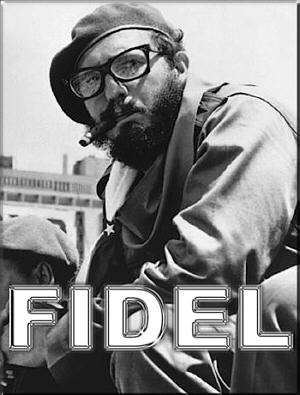
Hugo Aguilera, Do You Still Like Castro?

I was sixteen years old and working as a bagboy in Hugo's Piggly Wiggly in Grand Forks, North Dakota, my home town. There were several of us, who became friends and did stuff together after work and sometimes double dated on weekends.

One day, a new guy joined our group. Well, he was hired as a bagboy, but he was an Engineering student at University of North Dakota, across town. We were pals at work, but he didn't hang out with us after.

His name was Hugo Aguilera and he was Cuban, here to learn, and take his knowledge back to Cuba. He used to joke, "This is Hugo's Piggly Wiggly, and I'm Hugo." The actual owner was Hugo Magnusson, father of three boys who went to Central High with us, and soon to become Mayor of Grand Forks.

This all was around the time that Fidel Castro had just taken control of Cuba and everyone was wondering what would happen next. All of my friends and I had generally been for Castro and the revolution, naively comparing it to America's Revolution. Little did we know.

At the time, we were busy speculating how Cuba would be changing as Castro took over. Hugo was an absolute Castro supporter, insisting that Cuba was about to become a much better country. He wasn't very specific about his personal philosophy, so to this day I don't know whether he was communist, or merely anti-Batista.

A little over a year later, Hugo went back to Cuba, and we all graduated high school. One of us became a conscientious objector and moved to Winnipeg, where he still lives. Four of us joined the Navy. Two went to work and soon were married, and the other two went to University.

Strangely, two years later I was an Engineman aboard USS Saratoga, an aircraft carrier, when we sailed into Caribbean waters to take part in the Cuban Blockade, in which President Kennedy tested Kruschev's resolve to place nukes 'pon Cuban soil. Kruschev ultimately backed down, but it was a tense couple of weeks.

I occasionally wonder what happened to Hugo and whether he's still alive and still as gung-ho for Castro as he was back in 1960.

They've killed Freedom! Those bastards!

Warm regards,

Col. Hogan
Stalag California

Wednesday, March 01, 2006


The Golden Age of Hitchhiking

My dad, in his youth, spent a year or so of his life riding the rails. It was the tail-end of the Great Depression, and many men wandered the country looking for greener pastures. Some were looking for adventure. Unfortunately, he never got around to telling me the details of the places he'd been and the things he'd done, so the episode will remain lost.

Later, as I edged into manhood, I had my own needs for adventure and experience. My childhood friends and I did a great number of things that I look back fondly upon. Many of these were things that would make today's overprotective parents blanch into a permanent verklemptitude, and probably wouldn't please my own more realistic parents very much, but they seemed to me like the thing to do at the time.

Having observed the soldiers and other migratory individuals thumbing their way through town to places that just had to be more interesting and more fun that Grand Forks, North Dakota, their mode of travel piqued my interest.

I tried my thumb going back and forth across town several times. Just about everyone who gave me a ride knew me or knew my dad. "Do your folks know you're dong this?" I thumbed my way to Crookston a couple of times and to Fargo.

I didn't do a lot of hitchhiking while in high school, because I had a car, a job and a girlfriend. Most of my time was accounted for.

While I was in the Navy, things were different. I couldn't afford a car, and had no place to keep it. I had a lot of free weekends. I was stationed, initially, at the training center in Waukegan, Illinois. I came up with the crazy idea to hitchhike from Waukegan to Grand Forks on the occasional weekend. It worked well. I'd get off base at about three pm and get to Grand Forks early Saturday morning. Sleep a little, run around with the guys, have a date, sleep in Sunday, start back by early afternoon, be back on base in time to catch three to six hours of shut-eye before Monday reveille.

I did that several times during the year-and-a-half I was there. I usually outran the buses.

I was transferred, after my engineman training, to an aircraft carrier in Mayport, near Jacksonville, Florida. During my time there (when we weren't at sea) I hitchhiked to New Orleans several times (a girl), to Miami several times (another girl) to Grand Forks three times, and from New York City to Grand Forks once.

I rode with many cross-country independent truck drivers, vacationing couples (usually the guy had been in the Navy himself), travelling businessmen, and the occasional drunk.

I got picked up by a lonely girl in Iowa once. I stopped to visit every time I went through there, after that. I rode with a drunk guy who crashed his car into big rig. He was killed in the crash; I suffered a broken ankle.

I ate in truckstops and diners all over the East, in a wood-burning Ozark diner, cafes in the bayoux of Louisiana, Mom & Pop diners, and many, many Denny's-style places. The ex-military guys would often pick up the tab, which was really cool.

I saw the southern cities and towns with the white side and the "colored" side. I saw the gas stations and restaurants that had "white only" bathrooms and drinking fountains. I was never turned out of a black-owned business (I was too naive to know that I wasn't supposed to be there) although most white-owned businesses either didn't serve blacks or had a special entrance in the back. I'd never seen anything like it.

I was rained on, snowed on and once spent a couple of hours on the highway in Bemidji, Minnesota when the temperature was 56 below zero. A Canadian trucker picked me upon his way to Winnipeg.

I wouldn't trade these experiences for the world. I met and talked to hundreds of very interesting, generous individuals. I spent time in towns and cities I'd only fly over today. America was a much freer, and less homogenous society (or assemblage of societies) back then. Things could be found in one part of the country that were really not found elsewhere. Sometimes, the local dialect was very hard to understand. Sometimes, local customs were very different from those to which I was accustomed.

Those days are gone, never to return. Nor should they, I guess. We were freer then, and able to do many things that are no longer possible.

You can't hitchhike anymore.

They've killed Freedom! Those bastards!

Warm regards,

Col. Hogan
Stalag California