Showing posts with label Old Friends. Show all posts

Friday, November 28, 2008

Things I Did Not Learn At School

When I first flew into the Stalag, so many years ago, it was complements of Uncle Sam, sending me on a scenic cruise around a pretty big chunk of the western hemisphere. The first stop was the Recruit Training Center on Point Loma, a part of the seaside town of San Diego. Thence to the Training Center in Waukegan, Illinois to learn to maintain and repair diesel engines, and then to Mayport, outside of Jacksonville, Florida to spend the remainder of my enlistment aboard the USS Saratoga, which was not powered by diesel engines, but steam turbines.

The ship did have a number of diesel powered utility boats though, so I guess it was all right.

While billeted aboard that ship, I had no small number of adventures, some of which might have been the death of many a lesser man. I've decided that as the mood strikes me, I'll relate some of these tales for the amusement of friends and relatives. In fact, a few of these tales already find themselves languishing in the archives.

Several of we who graduated high school in the Central Class of 1961 opted to join the Navy within weeks or months of graduation. Every one of them, but myself, ended our training with orders to such places as Japan and the Philippines. I went to a ship on the east coast. Months later one friend, Gareth Johnson from East Grand Forks, suddenly appeared aboard Saratoga. We had been acquainted in Grand Forks; we became fast friends in that foreign setting.

Soon, we were off to the Mediterranean Sea for a cruise of several flight exercises and many foreign ports. Somewhere off the coast of Spain, we had a ship-to-ship with the other carrier in the fleet, the USS FD Roosevelt, as I recall. There was about a twenty-foot swell as we anchored, and we of the utility boat crew were to run some supplies and foodstuffs between the ships.

Handling a fifty-foot utility boat in a twenty-foot swell can be an adventure in itself when you're 20-years old. My job was the bow line. The trick was to secure the line to a vertical line tied high and low on the ship's hull, so that as the boat rises and falls with the swell, the lines slide up and down with it. Half a dozen fenders keeps the boat's wooden gunwales from getting chewed up by the steel ship's hull.

You wait for the top of the swell, then grab the jacob's ladder and scramble up as fast as you can, before the boat can come up on the next swell and hit you.

The funnest part of the day was the moment when I was standing 'pon the bow, bow line in hand, ready to tie off. Suddenly, the swell dropped away with the boat, leaving me ten feet in the air, holding onto the bow line for dear life. Luckily, the boat rose to meet me coming down, and I landed hard on the deck. Multiple bruises and a slightly sprained wrist.

Not far from this rendezvous was the island of Mallorca, where we anchored for a couple of days. This liberty turned out to be more of a plain old fashioned good time than what you'd call an adventure, and I wouldn't have missed it.

Gary and I were in the process of trying out local beers when we stumbled into a group of revelers from Britain. There were about eight or ten of them, visiting on holiday, and celebrating their last night before their return flight home.

The group, both boys and girls around my own age, turned out to be an excursion group, none of whom had known each other, before this holiday. There were no boy-girl friends in the group, as was evidenced by the fact that two of the girls quickly fastened onto to Gary and I, and there were no fights.

Mary Collins was her name, and she was from Cardiff. She was (and still is, one hopes) a very pretty and fun-loving girl. She told me I looked like Paul McCartney. I asked her who was Paul McCartney? In all fairness, it was 1963, and I'd been kind of out of circulation aboard the ship for a while. The Beatles weren't very widely known in the States, at that time.

I probably wouldn't recall her name (although there are things about her that I'll not forget), except that we kept in touch for a while, and as it happens, I still have one of her letters.

She reminds me of some of the things we did. There are other things of which she doesn't need to remind me. Seems we did some more beer drinking, and at one point, ran off from a sidewalk cafe without paying. Now, I don't remember doing that. It's something I'd never do, although I did drink a lot more in those days than since.

We ended up in a secluded corner of a park, each with a bottle of beer in hand. Alas, the night was too short. She had to catch her plane and I had to muster aboard the ship. I had to call in a favor to get my pals on the utility boats to smuggle me back to the ship, five hours late.

An indisputable fact: it was worth it!

Never stop having adventures.

Warm regards,

Col. Hogan
Stalag California

Monday, September 01, 2008

Remembering Elmer Keith

In the late 1960-s and early 1970's, in California's pre-Stalag years, my interest in firearms soared along with both my abilities as a geotechnical technician and my earning ability. Suddenly, I had enough money to indulge in hobbies and intellectual pursuits. I've always been a reader, and gobble up books one after another. I stumbled 'pon Ayn Rand in 1966, and still read Atlas Shrugged about every eighteen months and I read books and articles by Rand's intellectual heirs in between times--along with numerous novels, etc.

Meanwhile, my interest in firearms increased in direct proportion to my ability to buy them. I owned well over two dozen different firearms between 1970 and 1975, including a Springfield 1903-A3 for which I hand carved a sport riflestock with a Buck knife, wood files and sandpaper. I owned three different .44 magnum handguns--one of which was Pasadena's own Automag .44, which I dearly wish I'd hung onto--and a few weapons I still have.

I used to hand load my own cartridges (I still have the gear, but haven't set it up) and I visited the old Silverado Canyon Range at least once a week. Once, I shot side by side with Gunny, the range's master, he with an accurized Colt 1911-A1 .45, and me with a Ruger .44 magnum Super Blackhawk. We shot at two-foot diameter steel plates hanged from chains, at 300 yards. He averaged five hits out of seven, I averaged three for six. It felt good to lose that way, to that great a shooter.

One of the men whom I consider a mentor, even though we've never met, is Mr Elmer Keith. Born in Missouri in 1899, he grew up in Montana, Idaho and eastern Oregon in a time when that area was still part of the Wild West. He became an avid and successful big game hunter, developing numerous new cartridges and bullets for both rifles and handguns, and thus was instrumental in the development of many of the sporting and defense weapons popular today.

Mr Keith was an avid writer, penning books on handgun use and writing a monthly column for Guns & Ammo Magazine from the 1960's into the 1970's. I read his Gun Notes columns regularly for many years, and began to develop my shooting philosophy thereby. Other mentors were Col Jeff Cooper, and Massad Ayoob. Ayoob still writes for a number of periodicals and has several books on handgun self defense. He also conducts handgun training through his Lethal Force Institute.

Keith was the one who started it all. His experiences and opinions on hunting and handgun handling, including his advocacy of handgun hunting, helped my to develop my abilities and some of my choices in weapons purchasing. Even though he passed away twenty-four years ago, I still I still remember, and miss his Gun Notes columns.

Gun control means hitting your target.

Warm regards,

Col. Hogan
Stalag California

Friday, January 26, 2007


Elizabeth Caldwell! Paging Miss Caldwell!

Diving way, way back into ancient memory files, I occasionally recall a girl for whom I felt a degree of juvenile fondness. I've stumbled across many of my childhood friends, in recent years, thanks largely to Algore's Internet, but Miss Caldwell still manages to elude my efforts.

It was she who was the seventh-grade science fair whiz about whom I wrote
here.

I was in the same class with her in 5th and 6th grades at West School in Grand Forks. I was just beginning to realize that girls were just possibly worthy of our attention. In junior High, both of us attended Valley, and I had a few "dates" with her. The dates consisted of my visiting at her home in the presence of at least one of her parents. Since I was a very naive young lad, and utterly ignorant of the ways of the world, I found this quite satisfying.

Elizabeth had dark, nearly black hair and very light skin. I though she was beautiful and, in my mind's eye, I still think so.

We had a date or two in high school and had a couple of classes together, but her path was toward the university and an academic life; mine was more technologically bent. She did science projects and played the French horn and I made mischief and worked on my car. And drove it.

Elizabeth graduated early, at the Senior mid-term, I graduated at the end of the Senior year. Two weeks after graduation, I joined the Navy, and completely lost track of her and all my other hometown friends--except those few who also joined the Navy.

On occasion, I've asked some of my friends what happened to others. I've located many of them. All I've learned about Elizabeth is that she went to University of North Dakota, and later I heard that she was a French language professor at Valparaiso. Since I don't know of her marital status, I don't know her surname.

Other than idle curiosity, I'd like to learn more about her because she was the individual, among all my friends and classmates, who seemed like she'd go the farthest.

Or, maybe she's just shrugged.

Warm regards,

Col. Hogan
Stalag California

Saturday, September 23, 2006


Life's Strange and Winding Paths

Having read Philosophical Detective's tale of the unusual twist in an old friend's life-path, I'm reminded of a somewhat similar if maybe slightly more common situation in my own experience.

I have a friend (since we were ten) who, after several years married and two kids, came out several years ago. I learned this from another childhood friend, after I went to my 35th anniversary high school reunion in North Dakota. He told me that Chuck (NHRN) had been in town that weekend, but hadn't taken part in the reunion festivities.

Since Chuck was living in Winnipeg, and I had flown in from the Stalag, I was a mite miffed that he hadn't made his presence known. I'd, of course, spent time with several of my other high school friends, rehashing old times and bringing each other up to date, telling lies and promising to keep in touch, but Chuck was one of those I really would like to have seen.

I had visited Chuck once during my biker years, back in the '70's. I rode up to Grand Forks on a vacation and visited a couple of friends. I got Chuck's phone number and gave him a call. After getting his address, I rode on up to Winnipeg.

The dopey Canadian border people made me leave my pistol with them at the checkpoint, but I was able to retrieve it on my way back. I don't know what Canadians have against self defense, but I swear they have a sheepish quiver in their voices and that they grow their own personal wool against the winter cold.

Chuck had a moral objection to the draft, and moved up to Canada right out of high school--and stayed there. I had the same objection, but solved it by joining the Navy. Being anti-authoritarian in the extreme, I had a rugged time with military discipline, but had a good experience with my time in service all the same. One hitch, though, and both I and the Navy had had quite enough of each other.

Back to my tale, I had a nice visit with Chuck and his family in Winnipeg. I got the impression of a very staid, conservative family man, whereas I was anything but that. I might've seemed like a bit of a wild man, riding up on a clattering motorcycle packed to the gunwales with camping gear, souvenirs and not-too-clean clothing.

Since then, according to my other classmate, he got divorced, and came out--all while being a very successful executive in a medical profession. I don't know what happened to his family.

He doesn't seem to want to communicate with me now. I'm guessing he might think I won't accept his orientation. Well, it does seem strange, but this is Stalag California, home of the fruits and nuts, and one can't live here too long without making acquaintance with the odd gay man. I've come to terms with that circumstance many years ago.

It'd be nice to be in touch with Chuck, but I guess it's not to be.

We had a lot of good times, back in the days of twenty-five cent-a-gallon gas and nickel candy bars.

Remember, VOTE FOR NO INCUMBENT!

Warm regards,

Col. Hogan
Stalag California

Friday, June 16, 2006


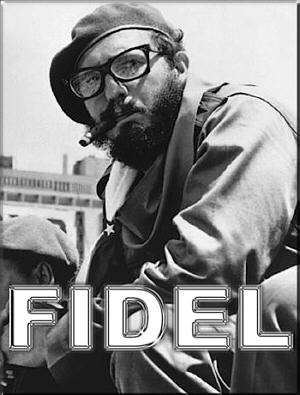
Hugo Aguilera, Do You Still Like Castro?

I was sixteen years old and working as a bagboy in Hugo's Piggly Wiggly in Grand Forks, North Dakota, my home town. There were several of us, who became friends and did stuff together after work and sometimes double dated on weekends.

One day, a new guy joined our group. Well, he was hired as a bagboy, but he was an Engineering student at University of North Dakota, across town. We were pals at work, but he didn't hang out with us after.

His name was Hugo Aguilera and he was Cuban, here to learn, and take his knowledge back to Cuba. He used to joke, "This is Hugo's Piggly Wiggly, and I'm Hugo." The actual owner was Hugo Magnusson, father of three boys who went to Central High with us, and soon to become Mayor of Grand Forks.

This all was around the time that Fidel Castro had just taken control of Cuba and everyone was wondering what would happen next. All of my friends and I had generally been for Castro and the revolution, naively comparing it to America's Revolution. Little did we know.

At the time, we were busy speculating how Cuba would be changing as Castro took over. Hugo was an absolute Castro supporter, insisting that Cuba was about to become a much better country. He wasn't very specific about his personal philosophy, so to this day I don't know whether he was communist, or merely anti-Batista.

A little over a year later, Hugo went back to Cuba, and we all graduated high school. One of us became a conscientious objector and moved to Winnipeg, where he still lives. Four of us joined the Navy. Two went to work and soon were married, and the other two went to University.

Strangely, two years later I was an Engineman aboard USS Saratoga, an aircraft carrier, when we sailed into Caribbean waters to take part in the Cuban Blockade, in which President Kennedy tested Kruschev's resolve to place nukes 'pon Cuban soil. Kruschev ultimately backed down, but it was a tense couple of weeks.

I occasionally wonder what happened to Hugo and whether he's still alive and still as gung-ho for Castro as he was back in 1960.

They've killed Freedom! Those bastards!

Warm regards,

Col. Hogan
Stalag California
Wednesday, August 31, 2005


Deep in the Heart of Dixie

The Deep South. Many years ago, when the South was still sort of a seperate country in just about every way but name, there was a two year part of my life in which I travelled about the area recently destroyed by Hurricane Katrina. It was a very pleasant part of the country--it will be again. Even now, some residents of the area are making plans to rebuild.

Seeing and hearing the news coverage of the ravaged areas, it seems like an impossible task, but there have been other disasters. We recover and rebuild. In a couple of years, we won't be able to tell there was a storm. New Orleans will never be the same, but it will be a wonderful city again.

Millions of people on and near the Gulf Coast have been wiped out. Their homes are gone. Their neighborhoods are gone. We don't yet know how many are dead, or who will yet die from secondary consequences of the storm.

I've found myself wondering about the fate of Julius, a Cajun man with whom I shared many a liberty in the Chicago/Waukegan/Milwaukee areas while we went to Engineman school at Great Lakes NTC. My orders sent me to Mayport, Florida to the USS Saratoga. His sent him to the West Coast to a ship, and presumably to Japan and maybe Southeast Asia. Before we left, Julius suggested that I spend part of my leave with him and his family in Lutcher, Louisiana.

It was there that I got my first taste of down home Cajun cooking, a style to which I quickly became addicted. Thus I remain, to this day. Blackened 'gator and redfish, crawfish bisque and Jambalaya poured over Cajun rice--don't get me started!

There's a brand of coffee we can still buy at most supermarkets, called Luziann. It has a little chicory mixed in. They don't advertise anymore that I know of, but when they did, they called it something like "the taste of Louisiana." The truth was, for the bayou folk, coffee was too expensive. They'd rather have had pure coffee any day of the week. They couldn't afford it. They cut it with chicory to make what they had go farther. Oh, some could acquire a taste for it, but it was ghastly, bitter stuff.

Lutcher was a small town, no one had much money. One of Julius' neighbors kept a large 'gator pit in his back yard. It looked to have about fifty 'gators sloshing around. Most of the folks fished or trapped in the bayoux back then. I think I remember seeing Po'k Salad Annie head out on a dugout canoe on one of those visits.

Oh, yeah. I went back a number of times on weekends from Mayport. Seems there was this girl..... Michelle Pernicieri, as I recall. Beautiful, but with one blemish to her nature: she was obsessed with getting away from Louisiana (to Los Angeles) and wanted someone to take her there. Well, I hope she made it. She sure tempted me.

All those times I hitchhiked across the Gulf states, from Jacksonville to the Bayoux, gave me an appreciation for that part of the country and a desire to travel through the area again. I'm deeply saddened by the events of the past few days and fervently hope that the recovery is easier and quicker than current predictions.

I find myself wondering whether Julius and Michelle, and the others whose names I've forgetten or never learned, are dealing with this disaster; if they're still there and still alive. I wish them well.

Warm regards,

Col. Hogan
Stalag California