Showing posts with label Philosophy. Show all posts

Thursday, February 26, 2009


Riddle Me This.....

I got the following in an email from a friend, who prefers to remain anonymous. In many cases, I wouldn't regard this sort of thing important--just amusing--but there are a few reasons why I modify my view in this case. I'll comment further after you've read the riddle.

I was born in one country, raised in another. My father was born in another country. I was not his only child. He fathered several children with numerous women. I became very close to my mother, as my father showed no interest in me. My mother died at an early age from cancer.

Later in life, questions arose over my real name. My birth records were sketchy and no one was able to produce a legitimate, reliable birth certificate. I grew up practicing one faith but converted to Christianity, as it was widely accepted in my country, but I practiced non-traditional beliefs and didn't follow Christianity, except in the public eye under scrutiny.

I worked and lived among lower-class people as a young adult, disguising myself as someone who really cared about them. That was before I decided it was time to get serious about my life and I embarked on a new career.

I wrote a book about my struggles growing up. It was clear to those who read my memoirs that I had difficulties accepting that my father abandoned me as a child.

I became active in local politics in my 30's then with help behind the scenes, I literally burst onto the scene as a candidate for national office in my 40s. They said I had a golden tongue and could talk anyone into anything. That reinforced my conceit. I had a virtually non-existent resume, little work history, and no experience in leading a single organization. Yet I was a powerful speaker and citizens were drawn to me as though I were a magnet and they were small roofing tacks.

I drew incredibly large crowds during my public appearances. This bolstered my ego. At first, my political campaign focused on my country's foreign policy. I was very critical of my country in the last war and seized every opportunity to bash my country. But what launched my rise to national prominence were my views on the country's economy. I pretended to have a really good plan on how we could do better and every poor person would be fed and housed for free.

I knew which group was responsible for getting us into this mess. It was the free market, banks and corporations. I decided to start making citizens hate them and if they were envious of others who did well, the plan was clinched tight.

I called mine "A People's Campaign" and that sounded good to all people. I was the surprise candidate because I emerged from outside the traditional path of politics and was able to gain widespread popular support.

I knew that, if I merely offered the people 'hope' , together we could change our country and the world. So, I started to make my speeches sound like they were on behalf of the downtrodden, poor, ignorant to include "persecuted minorities" like the Jews. My true views were not widely known and I needed to keep them unknown, until after I became my nation's leader.

I had to carefully guard reality, as anybody could have easily found out what I really believed, if they had simply read my writings and examined those people I associated with. I'm glad they didn't. Then I became the most powerful man in the world. And the world learned the truth.

Who am I?


ADOLF HITLER.

WHO WERE YOU THINKING OF?

The parallels are very striking, though as I wrote above, I wouldn't normally attach much real-world importance to it.

The true importance here lies in the deception practiced by the supposed writer of the tract, which is very similar to many of the deceptive words and acts of certain candidates for public office in the here and now (and recent).

Bill Clinton was never forthcoming with his medical records, tax records or many other areas of his past while running for President of the US. He constantly lied about his personal philosophical and political tenets and the plans and policies he intended to put in place after he achieved office.

Hillory Clinton actively hid (and as far as I know, continues to hide) her university writings and papers, and also lied continually about her political philosophy while running both for the office of Senator, and in the Presidential Primary campaign.

B Hussein Obama has been even more secretive about his origins (his certified birth certificate has still not been made available) and the full extent of his hatred for the builders and achievers that make America stand out as the world's standard of liberty and a high standard of living is only now coming to light in the manner of his early pronouncements.

Look for the announcement of a scapegoat as these policies fail.

And look for further parallels between today's America and yesterday's Germany.

"Those who cannot learn from history are doomed to repeat it." -Santayana

Warm regards,

Col. Hogan
Stalag California

Monday, February 23, 2009

The Emancipation Proclamation, Disassembled

I've seen this strip before, but today my pal KC reminded me of it. It's a graphic version of Friedrich A Hayek's book, The Road to Serfdom. It was originally published in Look Magazine not long after the end of WWII.

It looks like not too many people read that issue......

The strip takes on additional meaning in the light of our new charismatic empty suit. B Hussein Obama seems to have won the hearts (they certainly don't use their brains) of the airhead entertainers, surfer bums and welfare queens with his promise of a free home in every garage, and free money to buy their pot.

Chickens tend to come home to roost, though, and so do unpaid debts. When it's realized that Caesar can't run the printing presses forever, and eventually, we'll need a better Plan. If the plan turns off the money spigot, the welfare queens won't like it. And, well, the rest of the story won't be fun to experience.

Better to stop this drift into cannibalism now, while there's still a memory of the America that once was. Find the graphic The Road to Serfdom here.

People shouldn't be afraid of their governments; governments should be afraid of their people.

Warm regards,

Col. Hogan
Stalag California

Addendum: TWC reminds me that the graphic strip was first published as a booklet as a part of General Motors' Thought Starter Series, then was published in Look Magazine.

Sunday, January 04, 2009


What Is A Libertarian, Anyway?

Over the years (over 40 of 'em, in my case), I've bumped into advocates of quite a number of varying opinions as to just what libertarianism is. I've run into even more opinions of what libertarianism is by non-libertarians. Particularly, by conservatives.

We're crazy, drug-addled ne'er do wells who only want drugs legalized.....and those individuals do, in fact, exist. We're anarchists, desiring to tear down all the country's institutions and traditions.....those exist, as well. There are conservatives, who have moved away from the GOP in favor of capitalism and less intrusion by government into our lives.....I've spoken to many. There are leftists who've studied a little economics and see the flaws in the Democrat welfare state......yes, indeed. There are would-be mountain men, who just don't want to be involved at all, and others who would disappear into the Rockies if they only dared. Perhaps there are some living that way, even as we meeker fellows contemplate how to minimize local, state and federal theft of an ever larger portion of our productivity.

Libertarianism doesn't necessarily embrace every one of these ways of life. If I may, allow me to direct you toward an essay that's going to be the first chapter of a book by L Neil Smith and his daughter Rylla Cathryn Smith. The essay, called What Libertarians Believe, can be found here.

Since Mr Smith is the individual who, with the exception of Ayn Rand, has influenced me more than anyone else with his work, I don't hesitate to make his ideas known, to the best of my ability.

Libertarian is very simple, really. It's an acknowledgment of the sovereignty of the individual. It's a recognition that each of us owns his life and all the products thereof. It's simply an absence of initiated force.

Anyone who tells you otherwise is not a libertarian.

They've killed Freedom! Those bastards!

Warm regards,

Col. Hogan
Stalag California

Addendum:

In my haste to finish this entry and hit the sack last night, I neglected to mention what Smith calls the Zero Aggression Principle, (ZAP) which was first (in Smith's recollection) penned by Thomas Jefferson, and in mine, by Ayn Rand. ZAP is central to any real definition of libertarianism and required for any kind of a rational society. See Smith's essay, in which he explains ZAP more fully.

Tuesday, October 14, 2008

Whatever Works

An eight-year-old Little League ball player hits a single. The next batter hits a sharp ground ball that's bobbled by the shortstop, who then picks the ball up and tosses it to the second baseman. The baseman, not yet at second base, swooped his glove, containing the ball, toward the base runner. The base runner reached second base. The umpire signs "Safe!"

The second base runner signals "time" and walks over to the umpire. "Sir, his body was between you and me, but I felt his glove brush my shoulder. I'm out."

An unbelievable story, right? It could never happen?

I've come to the conclusion that this is where our current "getting away with it" attitude starts. Sports coaches teaching youngsters to take an erroneous call in their favor. Teaching them to seize advantage by breaking rules, and trying to hide it from the referee.

In the children's prisons, it becomes ok to sneak a look at the test paper of another, if it can be done unobserved. It no longer is a problem that one's peers are aware of his ethical shortcomings, it's only a problem if he gets caught. Even then, his peers will likely respond with "Dawg! Good try!"

After a number of years and a number of confirmations of this behavior pass, our ethically challenged lad graduates law school and becomes an attorney. The firm at which he's employed--as do most law firms today--advocates and requires him to win the case regardless of truth and regardless of the harm caused to the innocent.

Then come years of success winning huge punitive sums for his clients, many of whom would have no complaint had they exercised diligence to protect themselves in advance, against deep pocket plaintiffs who were merely attempting to provide a service, and who had been problem-free for decades. He decides to go into politics.

After building a warchest and setting up a campaign staff, our anti-hero wins the election by digging up irrelevant dirt on his opponent. He has used, walked over and cast aside friends whose usefulness is at an end, or who become liabilities.

It doesn't matter, his plan for his people is unquestionably good. Should anyone actually try to question it, they are evil and enemies of the people. They are to be discredited, and jailed, if possible.

Meanwhile, the country sinks into a war of each man's hand in the pocket of another and productivity being punished at every turn.

This is the path destined for those who advocate the maxim, "The end justifies the means."

Unless a more livable philosophy can achieve pre-eminence, the world will slide, on the skids of altruism, back into a new Dark Age.

They've killed Freedom! Those bastards!

Warm regards,

Col. Hogan
Stalag California

Friday, March 21, 2008


A Possible Future History--and How to Avoid It!

I wasn't aware of Dan Simmons, but I am now. This short story of his is definitely worth a read. It ought to be required reading in every home. Islam is the religion of peace, but the word "peace" in islam means "submission."

Tip of the battered gray fedora: Stephen Browne at Rants and Raves.

Peace comes through philosophical conviction.

Warm regards,

Col. Hogan
Stalag California

Thursday, February 21, 2008


Capitalism: The Forgotten Ideal

I'm an admirer of PJ O'Rouke, both for his political positions, and for the wit that saturates his writing. The following, referring to a quote by Adam Smith, the famous Eighteenth Century Scottish philosopher, was highlighted by Jonathan Pearce at Samizdata. Mr Pearce used this quote as the opening paragraph of an excellent review of O'Rourke's book, On The Wealth of Nations.

"Smith did believe free markets could better the world. He once said, in a paper delivered to a learned society, that progress required "little else...but peace, easy taxes, and tolerable administration of justice." But those three things were then - and are now - the three hardest things in the world to find. Smith preached against the gravitational load of power and privilege that always will, if it can, fall upon our livelihood. The Wealth of Nations is a sturdy bulwark of a homily on liberty and honest enterprise. It does go on and on. But sermons must last a long time for the same reason that walls must. The wall isn't trying to change the roof's mind about crushing us."

- P.J. O'Rourke, On the Wealth of Nations.
I might hasten to add that I'm also an admirer of Adam Smith.

Tip of the battered gray fedora: Samizdata.

They've killed Freedom! Those bastards!

Warm regards,

Col. Hogan
Stalag California

Friday, January 18, 2008


A Few Pithy Quickies

I've read several of these before, but they bear repeating. This batch is courtesy of my Brother, the Texan.

If you don't read the newspaper, you are uninformed.
If you do read the newspaper you are misinformed. - Mark Twain

Suppose you were an idiot and suppose you were a member of Congress.... but then I repeat myself.- Mark Twain

I contend that for a nation to try to tax itself into prosperity is like a man standing in a bucket and trying to lift himself up by the handle. - Winston Churchill

A government which robs Peter to pay Paul can always depend on the support of Paul. - George Bernard Shaw

Democracy must be something more than two wolves and a sheep voting on what to have for dinner. - James Bovard, Civil Libertarian (1994)

Foreign aid might be defined as a transfer of money from poor people in rich countries to rich people in poor countries. -Douglas Casey, Classmate of Bill Clinton at Georgetown University

Giving money and power to government is like giving whiskey and car keys to teenage boys. - P.J. O'Rourke, Civil Libertarian

Government is the great fiction, through which everybody endeavors to live at the expense of everybody else. - Frederic Bastiat, French Economist (1801-1850)

Government's view of the economy could be summed up in a few short phrases: If it moves, tax it. If it keeps moving, regulate it. And if it stops moving, subsidize it. - Ronald Reagan (1986)

I don't make jokes. I just watch the government and report the facts. - Will Rogers

If you think health care is expensive now, wait until you see what it costs when it's free! - P. J. O'Rourke

In general, the art of government consists of taking as much money as possible from one party of the citizens to give to the other. - Voltaire (1764)

Just because you do not take an interest in politics doesn't mean politics won't take an interest in you! - Pericles (430 B.C.)

No man's life, liberty, or property is safe while the legislature is in session. - Mark Twain (1866 )

Talk is cheap...except when Congress does it. - Unknown

The government is like a baby's alimentary canal, with a happy appetite at one end and no responsibility at the other. - Ronald Reagan

The only difference between a tax man and a taxidermist is that the taxidermist leaves the skin. - Mark Twain

The ultimate result of shielding men from the effects of folly is to fill the world with fools. - Herbert Spencer, English Philosopher (1820-1903)

There is no distinctly Native American criminal class...save Congress. - Mark Twain

What this country needs are more unemployed politicians. - Edward Langley, Artist (1928 - 1995)

A government big enough to give you everything you want, is strong enough to take everything you have. - Thomas Jefferson
These are some of the men who shaped/are shaping the world in which we live. One must hope that there are enough of these men and women to begin to reverse the trend of the past hundred years or so.

In a philosophical recession.

Warm regards,

Col. Hogan
Stalag California

Wednesday, December 12, 2007

To Kill A Thief

From a philosophical tenet I first read in an Ayn Rand essay, one has to realize that when a man sets out to take or damage the person or property of another, that's the moment he commits suicide. By not recognizing his victim's right to his life and property, he renounces the concepts of life and property--which effectively is a denial of his own right to his own life.

When his victim then shoots him in self defense, it's the criminal's own finger on the trigger. One needs never feel guilt over successfully defending himself.

Now, if only the law were to be rewritten to support this tenet......

They've killed Freedom! Those bastards!

Warm regards,

Col. Hogan
Stalag California

Saturday, September 15, 2007


Fifty Years of Riveting Reading

Ayn Rand's Atlas Shrugged was published fifty years ago October 12th. I first read the novel in 1966, having already enjoyed her second novel, The Fountainhead. I was driven to learn more. I attended an NBI (Nathaniel Branden Institute) Basics of Objectivism lecture series in Hollywood, then I began to cast about for like-minded individuals. At the time, there seemed to be very few, but as time passed, I located some libertarian meeting groups and met some libertarians who were not objectivist-oriented, as well as many who were.

Over the years, I've met and become friends with many objectivists and many libertarians who found their way to liberty-oriented philosophies by other means.

Today's (Sept 15th) New York Times published a story, in its Business section, about Atlas Shrugged and how it has influenced many CEO's and top businessmen to get to where they are today. After the horrible review NYT gave Atlas Shrugged at the time of its publication, this story seems rather a turnabout.

It's kind of gratifying to see that, after all the scandals and peccadilloes, the Times has finally come to terms with Atlas Shrugged.

I read Atlas Shrugged every couple of years, partly to satisfy my craving for the portrayal of successful rebellions against the parasitical political class, and partly to renew in my mind the way the world might be and ought to be. I'm very much looking forward to the upcoming movie, even realizing that movies often don't measure up to the level of the novels from which they're developed. Athas Shrugged has some good people involved in its development, so I'm optimistic.

"In the name of the best within us....."

Warm regards,

Col. Hogan
Stalag California

Sunday, May 13, 2007

Planes, Trains, Guns and Automobiles

I've long known that the real, deep down reason why collectivists hate technology is that they hate life. They hate our increasing success at life. They hate our love of life. They will expend any effort to sabotage that which we, each of whom is successful at enjoying his life, his efforts to enjoy it and the products thereof.

It's difficult to examine the motivations behind the destructive efforts of collectivists in a short article, and their reasons. There is a short answer: Envy. Collectivists envy the happiness of the independent individual and, unable or unwilling to ask and answer the questions necessary to achieve any degree of happiness, their only consolation lies in attempts to destroy the happiness of others.

This is the source of government regulation of business and industry. It's the source of blue laws, vice laws and other "victimless crimes." It's the reason for movies, novels and stories that cast achievers as villains and industrialists as predators. Today, it's the source of this "global warming" foolishness. And, it's the source of the federal government's unjustifiable notion that we are to be the world's policeman.

Ayn Rand writes to expose collectivists as the saboteurs of human happiness, as do L Neil Smith, Robert A Heinlein and a host of others.

Today, I'm trying to catch up on my subscription to The New Individualist. I'm reading the Soliloquy column, by Robert Bidinotto, which is entitled, "Cheerleaders for American Defeat." Now, I'm not a fan of the war, if one can properly call it a war, in Iraq. 'Twas the evil al queda who were behind the attack 'pon America's most recognizable trade and military buildings, and it should be al queda against whom our military efforts ought to be directed.

In spite of denials, I think attacking Iraq was an unnecessary sidetrack; a personal, and not-very-well-thought-out vendetta on the part of the President. He has often said that the "War on Terror" will not be won quickly nor easily. It's my opinion that his actions are designed to make sure of that.

But, I digress.

My opinion of the war doesn't excuse Bidinotto's "cheerleaders." His point is that the only kind of war in which the US ought be involved is of the altruistic variety--in which there is no national interest to the United States, and in which some third world dictatorship hopes to extract more money from the productive members of the United States by creating a crisis only we (the world's policeman) can solve.

Another aspect that Mr Bidinotto points out is that "manifestations of self-assertion and self-interest--guns, the automobile, space exploration, big businessmen, material luxuries, economic profits, cities, the capitalist system itself--are so widely damned" by the left. As the tools for, and products of our productivity, they're detested by the world's parasites because we've worked for them and we've earned them--which they're unwilling or unable to do.

That's why I smile when I see a Rolls or a Bentley cruising along the road. It's nice to know such things are possible, and that they could be possible for me!

They've killed Freedom! Those bastards!

Warm regards,

Col. Hogan
Stalag California

Monday, November 13, 2006


The Law of Identity

No, this isn't going to be a philosophical treatise, but there's another long-running phenomenon in the realm of interpersonal communication, 'pon which I'd like to comment.

Labels.

From the tender age of about sixteen, when I referred to a young lady with whom I was talking in some particular way, she suddenly said angrily, "Don't label me!"

I don't recall what I said to her or even whether I was right or wrong, but I remember being at once taken aback by her sudden outburst and wondering what on earth she meant. Well, I've heard that phrase several times over the years and sort of put it down as being some kind of girl thing.

I didn't think much about it, but a reference on one of the tv political talk shows brought it back into focus. In the first days after the election, a Democrat Party Strategist was asked something to the effect, "With Nancy Pelosi as House Speaker, will her agenda be as far-left as her recent rhetoric, or will she attempt to work with the President in a non-partisan way?"

Well, the woman (the reason I mention her gender is that I've never heard a male use this sort of argument) affected a conciliatory pose and answered, "Why do we need to use such divisive labels?" or words to that effect.

I finally figured it out!

They don't want to be identified for what thay are, or what they're doing. They don't want to hear it spoken out loud.
A thing is--what it is; its characteristics constitute its identity. An existent apart from its characteristics, would be an existent apart from its identity, which means: a nothing, a non-existent. [Leonard Peikoff, "The Analytic-Synthetic Dichotomy"]
It seems as though the wish not to be "labelled" is a wish to hide one's characteristics from others, to hide these characteristics from oneself, or at the very least, a wish that those characteristics not be named.

The first thing one has to do is ask oneself why.

They've killed Freedom! Those bastards!

Warm regards,

Col. Hogan
Stalag California
Friday, May 05, 2006


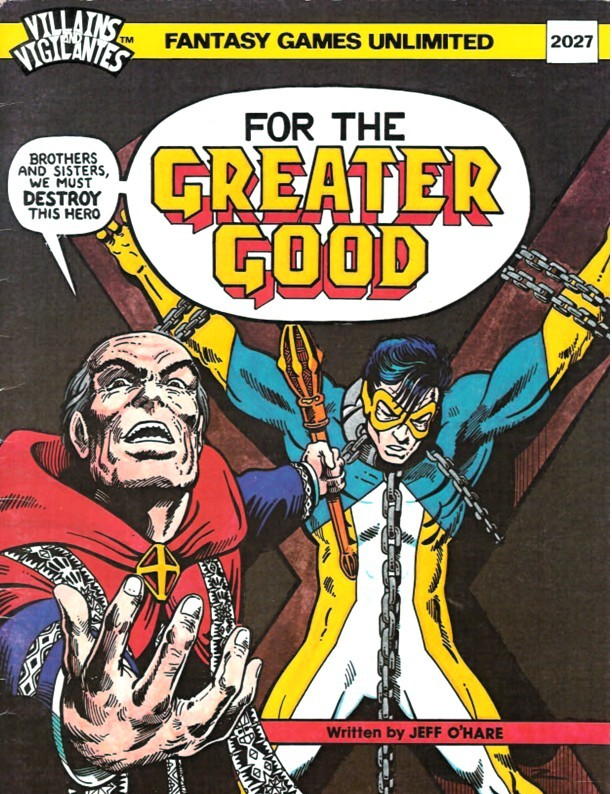
The Greater Good

Politicians, many of them members of the conservative persuasion, who command fat salaries for, in essence, extract by force pieces of our lives (often the whole of someone's life) to use for their own ends, love to cite "the greater good" as the goal of their thefts. "For the greater good" is also cited as the reason why certain individuals make sacrifices to the benefit of such nebulous concepts as "humanity," "my country," "future generations," etc.

"The greater good" is very often an euphemism for "god" or "god's will," as decreed by a priest or witch doctor, or such. One should always take "the greater good" to mean the good of the individual who makes the pronouncement. Because that's what he means when he invokes the phrase (whether he'll admit it or not).

One might observe that, for example, nearly all of those who praise American military men and women for contributing to "the greater good" are beyond eligibility to enter the military, and most of them have never done so.

I reject any notion of "the greater good."

The greatest possible good is what's good for me. Depending 'pon the context, that might also mean what's good for those about whom I care.

While most of the world is writhing in an orgy of self-sacrifice, the truth comes out: the world works best when each individual takes care of himself. For those relative few who have periods of need, there are friends, relatives and private charity can provide relief. In the absence of the all-consuming vortex of "the greater good," each of us can easily deal with those relative few who hit rough periods.

The sooner each of us can dispose of these silly concepts and learn to truly enjoy his own life, the better for the world and every one of us.

They've killed Freedom! Those bastards!

Warm regards,

Col. Hogan
Stalag California
Wednesday, February 22, 2006


Any Port in a Storm

I don't like to treat symptoms. While some of my solutions might seem to some to be pie-in-the-sky fantasizing, mental meanderings into some kind of idealistic dream world, I see them as cutting through the bureaucratic layers of crap and the justifications of layers and layers of an impossible patchwork of quick fixes and pragmatic political payoffs.

I see them as ways to fix it once and fix it right.

Politicians and their apologists are quick to use the excuse, "this decision is just like that decision. That decision was judged Constitutional by the Warren Court in 1959." Well, if the problem is looked at with the eye of a non-receiver of government paychecks (or payoffs), and compared directly to the Constitution as written, in light of the opinions of the Founders as written in the Federalist and Anti-Federalist Papers, it's very clear that it's not Constitutional at all.

Let's try an example. The so-called "War on Drugs," (truthful name, War on the Bill of Rights) has been ratified by all and sundry politicians, both Republican and Democrat, from local Chiefs of Police to the President of the United States. Cases run through courts from local through the US Supreme Court and the answer is always the same: the "War on Drugs" is Constitutional. Warranted and warrentless searches of individuals' homes, computers, medical records and financial records is routine when the word "drugs" is breathed. Yet, point to me the phrase in the Constitution that gives gevernment the prerogative/mandate to control that which any individual may ingest. G'ahead. I dare ya.

How about another? How about the current port flap?

I think it's less a problem than do most. I don't care who's managing the eastern seaports as long as they're good at their jobs. I don't care who's pullin' dat barge, as long as they're good barge pullers.

The problem isn't with who's contracted to manage the ports, it's who owns the ports. Government should not own nor have anything to do with the ports. Why? Because government can't do anything right. Note the confusion: government announces that it'd be easy for a "terrorist" to hide a WMD in a container and ship it to the US. Then, almost without taking a breath, they admit that they can only inspect 3-5% of the containers that arrive at the ports!

It's the Coast Guard and Customs that are responsible for inspecting the ports. These are government agencies. The one characteristic that unites all the employees of all the government agencies is laziness. They're not going to do anthing unless it'll hurt not to--and managers, because of civil service rules (the Coast Guard' military rules are a little better, but not much) can't enforce much discipline.

The incentive needed to run a good seaport, like just about anything else, is ownership. Full ownership, not that quasi-ownership in which business fronts the capital and government makes all the rules, but absolute, for profit ownership. No government agent should be able to enter the property unless he has a warrant signed by a judge who can be disembenched for signing frivolous warrants.

Profit incentives will force owners and their managers to work effectively. If the owners of a por continually has problems such as explosions and lost shipments, shippers will use other ports and the problem port will go out of business, close and be sold, presumably to enrepreneurs who will do it better.

There is some Constitutional justification for government meddling in international trade, and I recognize that. I disagree with the two-plus century-old reasoning behind it--it's merely a bit of mercantilist baggage that sneaked over here in an uninspected ship from 18th Century England. It can be eliminated by Constitutional Amendment.

Remember, VOTE FOR NO INCUMBENT!

Warm regards,

Col. Hogan
Stalag California

Friday, November 18, 2005


Why Hate Republicans?

As most of you know, I pay attention to politics. I don't have time to watch it as much as the real bloggers; maybe not that much interest, but it gives me something about which to complain.

As most of you also know, I'm a libertarian. A pretty radical one. When I say radical, I mean that it all starts from the fact that no individual may initiate force against any other--never, never, not ever. Even the National Libertarian Party, which once required one's signature on a pledge of non-initiation of force as a term of membership, has continually been trying to get its members to put an end to the requirement to sign that Pledge. I'm not sure if they still require it or not. I do.

My handy-dandy quick-snap gauge to separate capitalists from socialists is the following: Any individual who advocates government's right to forcibly tax its citizens, that is, initiate force to raise revenue, that individual is a socialist. Any individual who denies government (or any entity) that right, is a capitalist.

Which brings me to my point--why hate republicans? Well, I don't only hate republicans, I also hate democrats, greens and other assorted socialists. The thing is....democrats, greens, peace & freedom types, etc. are so nearly incoherent, are so opposed to everything that sustains life and makes it worth living, that only the very worst victims of the government's alleged school system can be taken in by them (the bad news: thanks to these same schools, the incoherence is growing). Republicans at least sound as if they have coherent arguments. That, of course, deserves more scrutiny.

If you listen to most conservative (republican) intellectuals, politicians and pundits, they talk a fairly good game proclaiming their interest in and perference for capitalism. They praise the virtues and benefits of the free market, individual rights and the wonder of individual initiative. They proclaim that capitalism makes us free. That the free market raises the tide of man's ability to live in comfort and happiness. That the tide of a free society "raises all boats." Indeed it does.

When we see the inconsistencies inherent in the conservative philosophy (such as it is), we have to wonder, though, what do they mean when they call up the revered word "capitalism?" Of what, to a conservative, does a free market consist? What is the philosophical justification for individual freedom?

Here, my friends, is where conservatives stand foursquare, unmoving and unmoveable, rockribbed and square-jawed, on a foundation of quicksand. They base their entire (some dare call it) philosophy on the christian god. They're ever so fond of pointing to their "god-given rights" as an answer to just about any political question or challenge. Oh, my!

When one answers any question with, "because god says so" or "it's in the bible," there is no where you can go with that. It's of course, not true, but there's a not-so-implicit moral sanction that says, "say no more, god said it, I believe it and that settles it."

God didn't say it. It may be in the bible, but who wrote the bible? How many times has it been translated and retranslated? What about the inconsistencies from book to book? Why do so many people read the bible and come away with widely differing conclusions? It makes no sense.

Man's rights derive from his nature as man. Every individual has the same rights and there is no multiplication of rights by virtue of number. These are rights to life, liberty and property. Therefore, to deny an individual's right to his property by force is to steal. George Bush has no more right to steal my property (my money) than does Alfredo Simpson of Merced. 290 million Americans don't have the right to vote to take the farm of one--no matter what the intended use.

Republicans often (not always) agree with much of this, although they grant government the right to steal some portion of my property for various purposes "as long as it's reasonable." This is where they fail, but it gets worse. Republicans espouse the virtues of a gruel of capitalism mixed with a reasonable amount of government theft, regulation and redistribution (the degree varies with the individual republican), as long as it's for "good purposes," but hold that, to a certain degree (the degree varies), that men should be free and have the right to life, liberty and property. To a degree.

Ok, you can kind of live with that. Now, wait until the republican runs for public office and gets elected. His conservative philosophy is so tenuously held and so ill-defined that when the left opposes him on any issue, he always folds. Always. Republicans, when elected, check their spines at the door of Congress (or whatever office to which they are elected).

That's why I hate republicans. I grew up in a republican atmosphere. It was from conservatism that I moved toward libertarianism. I get their philosophy, even though I no longer agree with much of it. Would that they could actually firm up their principles (such as they are), take them to Congress and fight for them, they'd win. If they would actually firm up those principles, though, they'd either move farther toward socialism--or maybe toward libertarianism. Republicanism is kind of an icky place filled with soft, wet things like Dennis Hastert and Trent Lott. No thinker would want to stay there.

No Republican will vote to deny the government to prerogative to initiate force against American citizens. They won't.

They're socialists.

Remember, VOTE FOR NO INCUMBENT!

Warm regards,

Col. Hogan
Stalag California
Wednesday, August 24, 2005


A Standing Army

The job of the Army is to protect the United States from foreign attack. Prior to the end of WWII, the US didn't keep much of an army, except during wartime. The army was just enough to keep the bases up and the brass polished. When it was decided to send American troops to Europe to fight in WWI, we had to first get an army recruited and trained. They were trained by Indian fighters. Once over there, they had to be retrained to fight less effectively, to take more casualties, in the European tradition.

When FDR was finally able to get us into WWII, we again had to scramble to get an army together. After that war, I guess Truman decided we'd better keep an army ready just in case.

Well, just in case has happened many times since the end of WWII which, during the Viet Nam undeclared war, prompted many to observe correctly that, "if the government has a large standing army, the government will find uses for it."

There was Korea, the Cuban Blockade, Viet Nam, Grenada, Bosnia, Somalia, Iraq, Afghanistan, and Iraq again. Tell me if I've forgotten any. The earlier wars in this group were fought within the envelope of what Generals wistfully refer to as The Cold War. I'll have to remember to ask some of my biker buds how cold they thought it was during the battles at Pork Chop Hill and Tet.

Every one of these were undeclared wars. Seems that when we have a huge standing army with nothing to do but train to kill people and break things, declaring war somehow went out of fashion. When we want a war now, we just send the troops in and they start shooting.

L Neil Smith, my favorite sci-fi writer and world-class libertarian thinker, wrote an article that proposes a solution. He recognizes that it'll be hard to get Americans to decide to implement his idea, as do I, but we'll strive for it. Anything less will, at best, slow our motion in the direction toward totalitarianism.

I've long thought that, if the Roman Catholic church can squeek by with 10% titheing (we know how impoverished they are), the US federal government is getting way too much of our hard earned cash. That, of course, is not hot news to anybody.

My proposal, which falls in line with Neil's, is that government not be allowed to forcibly tax anyone. A radical proposal? Read the US Constitution. Prior to the adoption of the Sixteenth Amendment, the US government was not allowed to tax individuals. Scholars disagree as to whether or not the Sixteenth was properly adopted (I rather think corners were cut), and we all know that government was far more respectful of the rights of individuals before it started snooping into our finances and our professional lives.

The federal government even conducted the evil and very expensive War between the States without compulsory taxation of individuals.

Needless to say though, in the absence of compulsory taxation, there are many things the feds would have to stop doing. Most of the general population might be willing to tithe five or ten percent to government, but not much more than that.

One of the things government would have to do away with is the big standing army. One of the few proper functions of government, according to the Constitution, is to protect the country from foreign invasion. A small army with a well-thought-out set of state reserve militiae, would satisfy that function.

Doing away with the thousands of unConstitutional gun control laws, that every individual has the full right to defend himself against attackers, foreign and domestic, would help even more. Even the most severely self-deluded invaders will recognize the difficulty of seizing territory, a few square feet at a time, from millions of armed individuals.

There is one Amendment to the Constitution I'd like to see. It'd take away all the incentive for the intergovernment discussions that lead to war: The federal government must be barred from any diplomatic relations with other nations. The federal government should restrict itself to maintaining a skeleton military, a system of courts and police. While I have no quarrel with the military sending agents out to gather intelligence from potential foes, the word should be defense.

Diplomatic relations can and should be initiated and maintained by international buyers and sellers of commodities. Who better? I'd bet my savings, could the truth be shown, that Shell, Standard, BP and other oil companies would not have made such a mess of American-Arab relations had government not been involved. And when I say not involved, I mean that each entire transaction is initiated, negotiated and consummated entirely by the oil company reps and the Arabs in control of oil sales. No government.

No government! What a concept!

They've killed Freedom! Those bastards!

Warm regards,

Col. Hogan
Stalag California